















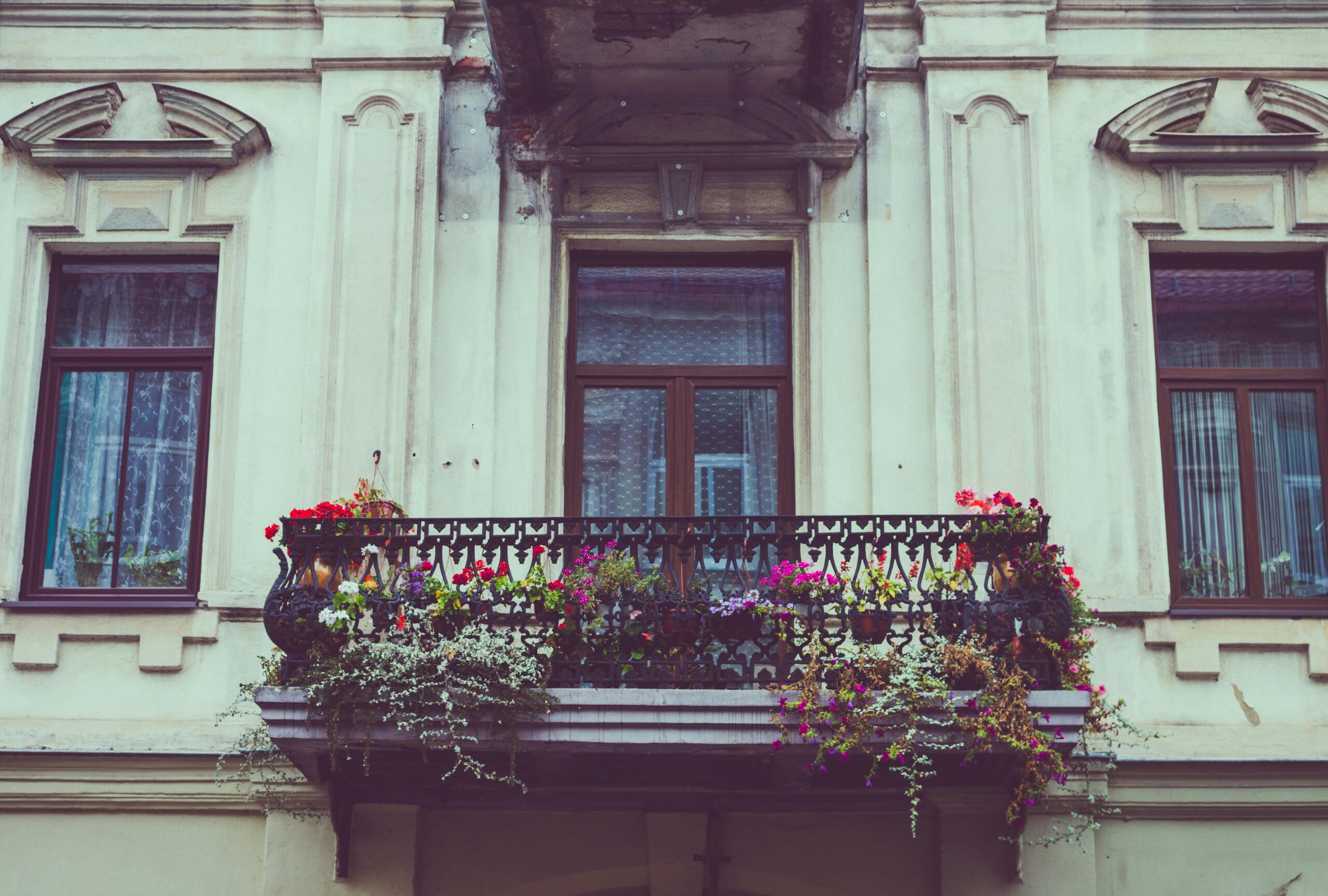

If you’re new to gardening and only have a balcony to work with, don’t worry, as you can still plant something beautiful and rewarding, even in the smallest of spaces. Balcony gardens are perfect for beginners because they’re manageable, easy to maintain, and can be as simple or as creative as you want. British Garden Centres is on hand to get you started, step by step, to create the balcony garden of your dreams.
Know your space
First, take a good look at your balcony. You need to know how big it is and if it gets a lot of sun, or is it mostly shaded, exposed to elements such as wind, or sheltered and warm. These details matter because they’ll help you choose the right plants at your local garden centre.
If your balcony gets plenty of sunlight six hours a day, we recommend planting up containers, hanging baskets or troughs of sun loving plants like tomatoes, peppers, herbs such as basil, rosemary, and thyme, and flowers like marigolds, bellis, petunias, pansies or fuchsias. If your space is shady, look for plants that thrive in low light, like ferns, ivy, begonias, or even some types of lettuce and salad leaves.
Check the weight
Before you start loading up your balcony with plants, check how much weight it can handle. Lightweight pots made from plastic or fibreglass are a good choice as they’re easy to move and won’t overload your balcony.
Wind can be a problem, especially if you live high up. Windy conditions can dry out plants quickly and even knock over pots, so use ones that have heavy bottoms and secure them with plant ties or stakes. Also, pick sturdy, wind resistant plants such as succulents, herbs like rosemary and lavender, ornamental grasses, hardy flowering plants like geraniums and marigolds, and coastal or alpine species adapted to exposed conditions.
Which pots and soil
It is important to make sure your containers have drainage holes at the bottom, as this stops water from pooling and keeps your plants’ roots healthy. If you find a pot you love but it doesn’t have holes, you can drill them yourself or use it as a cover pot with a plastic liner inside.
Use good-quality potting soil or compost as it is lighter, drains better, and is free from pests and diseases and keep your pots raised on potting feet to avoid standing water on your balcony floor when watering. Once you’ve got your pots, fill them about two thirds full of soil. Gently remove your plant from its plastic pot, loosen the roots a little, and place it in the new pot. Add more soil around it, pressing lightly to make sure the plant is secure. Leave a little space at the top so you can water without it spilling over. If you’re planting seeds, follow the instructions on the packet for depth and spacing.
Watering and feeding your balcony garden
Balcony plants dry out faster than garden plants because pots don’t hold as much water. Check your plants every day or two. Make sure you stick your finger into the soil, and if it feels dry, it’s time to water. Make sure you water slowly until you see water coming out of the drainage holes to make sure the plant roots get a good drink. Avoid letting your plants sit in water, as this can cause root rot.
Every couple of weeks, give your plants a little boost with a liquid feed, especially if you are growing edibles and flowering plants on your balcony, as they use up nutrients quickly in pots.
A beautiful balcony
Your balcony garden should be a place you enjoy spending time in. Add a few decorative touches, maybe some fairy lights from our Fern Lighting range, a bistro table and chair from our Fern Living range, or a colourful rug. Mix and match pots in different sizes and colours for a fun and vibrant look.
If you’re short on space, try vertical gardening. Hang pots from the railing, use wall mounted planters, or grow climbing plants like sweet peas or jasmine up a trellis. This not only saves space but also adds height and interest if your floor space is limited.
Julian Palphramand, Head of Plants at British Garden Centres, said: “ Balcony gardening is a fantastic way to connect with nature, even in the heart of the city. It’s easy to start, rewarding to maintain, and a wonderful way to add a little green to your everyday life. With these simple tips, you’ll be well on your way to creating a beautiful, thriving balcony garden—no matter how small your space.”
British Garden Centres (BGC) is the UK’s largest family-owned garden centre group with 73 centres around the country. The group is owned and led by the Stubbs family, who also own and operate Woodthorpe Leisure Park in Lincolnshire.
BGC was launched in 1990 with the opening of Woodthorpe Garden Centre by brothers Charles and Robert Stubbs. Since 2018, it has expanded rapidly with the acquisition of 50 garden centres, allowing it to grow from its heartland to the business it is now, with 73 garden centres spread from Carmarthen to Ramsgate, Wimborne to East Durham.
The group has a team of 3000 colleagues working across the garden centres, restaurants, growing nurseries, distribution centres, Woodthorpe Leisure Park, and Woody’s Restaurant & Bar.

| [donate]
| Help keep news FREE for our readersSupporting your local community newspaper/online news outlet is crucial now more than ever. If you believe in independent journalism,then consider making a valuable contribution by making a one-time or monthly donation. We operate in rural areas where providing unbiased news can be challenging. |