















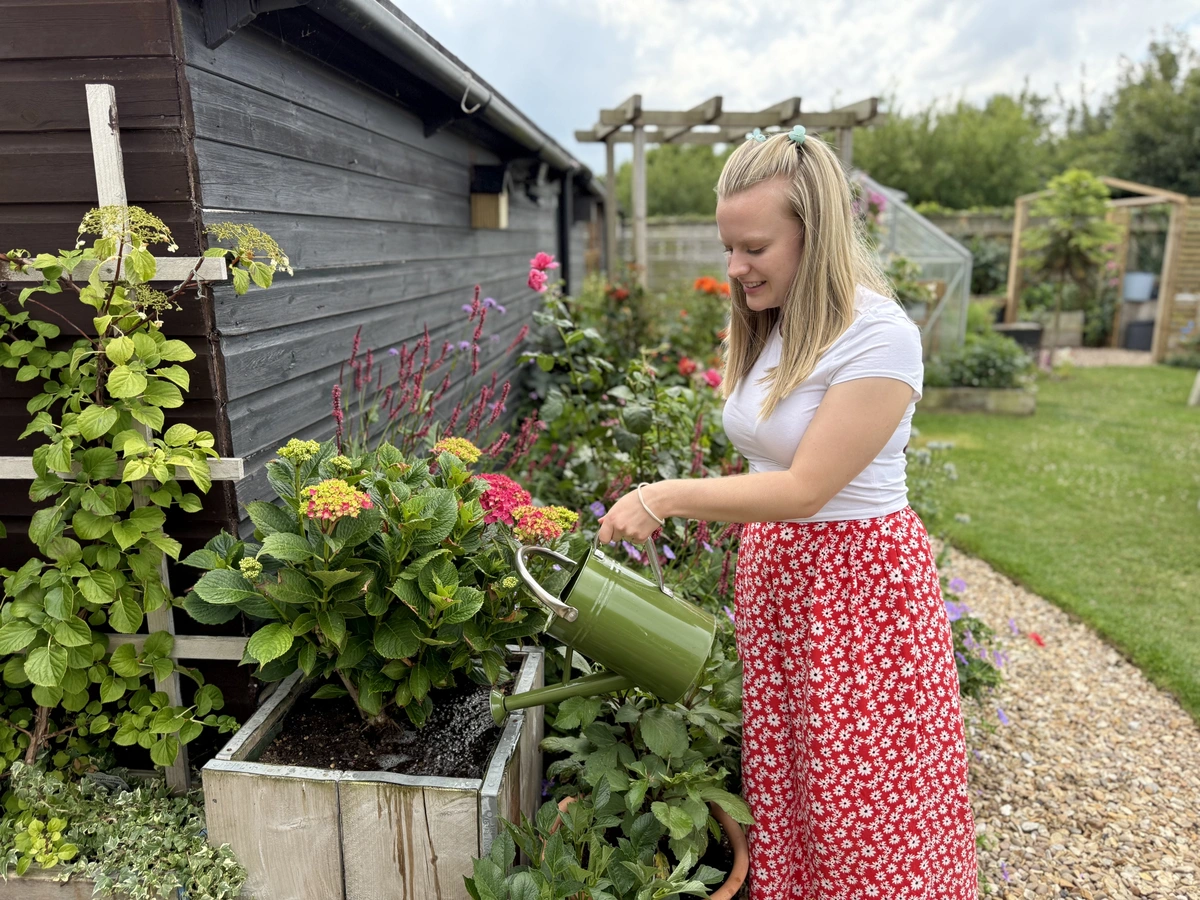

With drought conditions now affecting the whole country and more areas experiencing water shortages because of the ongoing heatwave, water companies have begun bringing in hosepipe bans in some regions. But don’t worry, as you can still keep your garden looking great without using too much water. British Garden Centres have shared some helpful tips on what’s allowed and what’s not during these temporary restrictions.
What does the hosepipe ban mean?
Due to the ongoing drought and water shortages caused by the heatwave, some water companies like South East Water, Thames Water, and Yorkshire Water have introduced hosepipe bans, and more areas may follow soon. This means you’re not allowed to use a hosepipe, sprinkler, or pressure washer to water your garden, fill a swimming or paddling pool, wash your car, clean windows, or fill ornamental ponds or fountains. A garden hose uses around five times more water than a watering can, so sticking to a can helps save a lot more water.
However, you can still use a watering can or bucket for these tasks. Breaking these rules is against the law, and you could be fined up to £6,000 (region dependent). The ban is in place to help save water during this dry period, but there are some exceptions, such as for people with medical needs or certain commercial uses, like garden centres.
How to water your garden
You can still look after your garden during a hosepipe ban by using a watering can, a bucket, or rainwater collected in a water butt. In some places, drip irrigation systems may be allowed, but always double-check with your local water company for specific guidance. Setting up a water butt is a simple and eco-friendly way to save rainwater, which you can use later for thirsty plants when it’s dry. The butt collects rain from your roof’s downpipe, making it a handy backup during summer and throughout water restrictions.
Another helpful tip is to reuse grey water, like the leftover water from baths, showers, and even rinse cycles in your washing machine. Just catch it in buckets or washing-up bowls and use it within 24 hours to avoid bacteria. Try to pour it right at the base of your plants where it’s needed most.
Don’t pour away unwanted water from your kettle or after cooking, as you use this for your plants too. The RHS recommends that watering in the morning during hot spells helps stop pests and diseases, while watering later in the evening might save water from evaporating, especially after cooler nights.
Mulching
Plants in containers and those planted directly in the ground both need extra care during dry spells because they can lose moisture quickly. Container plants dry out faster since their roots are confined, but plants in the ground can also suffer if the soil dries out too much. Adding a layer of mulch, such as wood bark, shredded leaves, or gravel stones, around your plants is very effective as it acts as a natural blanket, keeping moisture locked in the soil, reducing evaporation, and helping keep the soil cooler. Mulching is useful all year round, as in winter, it allows heavy rain to soak into the soil, and in summer, it holds moisture beneath the surface, which plants need in hot weather.
For plants in the ground, improving the soil with plenty of compost or organic matter will also make a big difference. Healthy soil holds water better and encourages roots to grow deep, where they can access moisture throughout dry periods. Regularly loosening the soil around plants also helps water penetrate more easily while stopping weeds that compete for water. Grouping plants with similar water needs together and choosing drought resistant varieties can further cut down how much watering is needed.
Watering early in the morning or late in the evening reduces water lost to evaporation, so your plants get more benefit from each watering. Using drip irrigation or watering cans to deliver water directly to the roots is a very efficient way to water, saving water compared to sprinklers or hoses. And for containers, look for non-porous pots that don’t lose moisture through their sides.
Choosing the right plants
Mediterranean plants such as lavender, sage, rosemary, thyme, and oregano are a great choice for gardens that experience hot, dry weather, as they thrive in warmth and don’t need much water. Other tough, drought tolerant options that do well in these conditions include ornamental grasses, eryngium, euphorbia, verbena, carex, and various types of palms. Verbena, sedum, hebes, osteospermum, achillea, and lavender are especially good for cutting down on watering, and they have the bonus of attracting bees and other helpful pollinators to your garden.
We recommend when planting these to use a good quality compost and mix in a slow release fertiliser. This not only helps your plants find the nutrients they need over time but also improves the compost’s ability to hold onto moisture, giving your plants a much-needed boost when water is in short supply.
If you have plants in pots, place saucers under them to catch any water that drains out, and the roots can soak up every drop, and you’ll spend less time topping them up.
Julian Palphramand, Head of Plants at British Garden Centres, said: “Gardening with care is more important than ever when water is scarce and hosepipe bans are in place. Every drop counts, so it’s up to each of us to make smart choices by watering in the early morning or late evening with watering cans, catching rainwater, and picking resilient plants that don’t mind the heat. These efforts might seem small, but together they do help your garden stay healthy and support your local environment, even during the driest spells.”
British Garden Centres (BGC) is the UK’s largest family-owned garden centre group with 73 centres around the country. The group is owned and led by the Stubbs family, who also own and operate Woodthorpe Leisure Park in Lincolnshire.
BGC was launched in 1990 with the opening of Woodthorpe Garden Centre by brothers Charles and Robert Stubbs. Since 2018, it has expanded rapidly with the acquisition of 50 garden centres, allowing it to grow from its heartland to the business it is now, with 73 garden centres spread from Carmarthen to Ramsgate, Wimborne to East Durham.
The group has a team of 3000 colleagues working across the garden centres, restaurants, growing nurseries, distribution centres, Woodthorpe Leisure Park, and Woody’s Restaurant & Bar.

| [donate]
| Help keep news FREE for our readersSupporting your local community newspaper/online news outlet is crucial now more than ever. If you believe in independent journalism,then consider making a valuable contribution by making a one-time or monthly donation. We operate in rural areas where providing unbiased news can be challenging. |