


















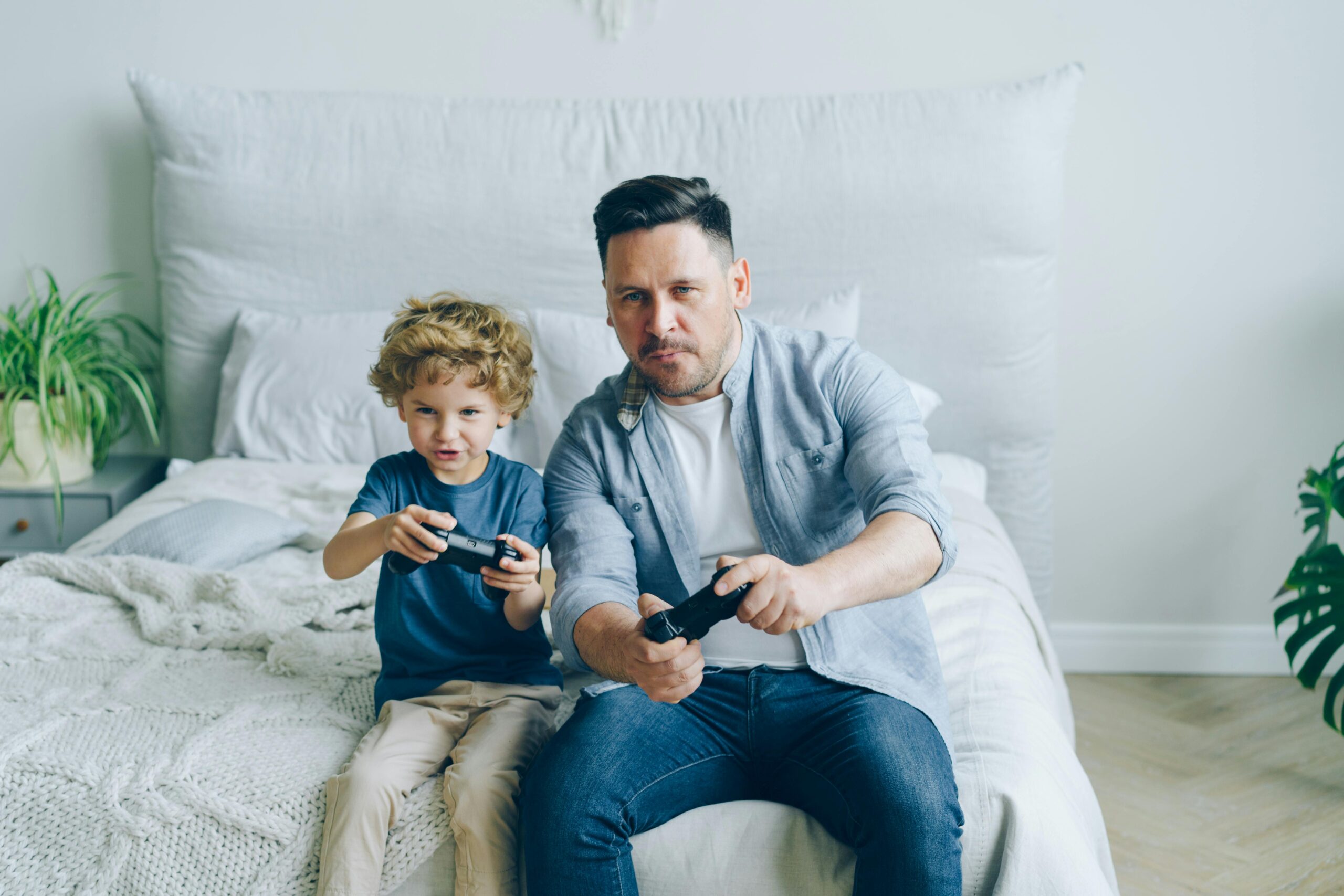

Recent statistics suggest that 39 million people in the UK game in some form or another, accounting for half of the total population. Not only that but this number is projected to rise to 59 million by 2029. Gaming is a popular and versatile recreational activity that appeals to many. However, negative views surrounding gaming still stand, with many suggesting excessive use of games can be the cause of sleep problems and increased aggression.
What is often overlooked are the many health benefits of gaming and how it can contribute to the normal functioning of our brains. In a study conducted by the Manchester Museum of Science and Industry and Western University in Canada, it was observed that individuals who regularly play video games score better in memory, attention, and reasoning skills tests than those who never play games.
Improved Mental Health through Socialisation
Many people with negative views towards gaming see it as an isolating activity. They hold images in their minds of gamers locking themselves away in dark rooms for hours on end and speaking to no one. Of course, some gamers may do this, but it is not the standard.
Many games, such as Minecraft and Baulder’s Gate 3 are cooperative games, enabling individuals to play with others. This can be done either on the same console (sat in the same room) or from separate consoles over Wi-Fi. These kinds of games have been proven to improve teamwork and reasoning skills alongside providing a backdrop to foster real-world friendships.
Community is also often a vital part of the gaming world. Online casinos, including those on non gamstop sites for those gamers who want more control over their hobby, often have chat functions and online forums where the games are discussed by their players. This enables users to improve their skills and integrate with people who share the same interests as themselves.
This comes with a whole world of benefits. Not only does increased socialization improve mental health, but from a neuroscience perspective being able to engage in our interests promotes learning and encourages motivation.
Staying Active
Those who hold a negative opinion of gaming may not know about the world of fitness gaming. Many modern consoles have add-ons that allow players to move as they play. For example, the Nintendo Switch has removable controllers and PlayStation’s VR2 comes with hand-held controllers alongside the headset. This kind of equipment makes the consoles compatible with games that directly promote a healthy lifestyle. Users can test their moves with games like Just Dance, or hone their Jedi skills with Beat Saber.
Not only is exercise good for our physical health, but research suggests it is a great factor in keeping our brains happy by releasing feel-good hormones such as dopamine and contributing to better sleep.
The fun doesn’t end there, recent research suggests that scientists are looking at ways to improve the experience of fitness VR games by monitoring the emotional state of their players and adjusting the game accordingly. Such developments would make these games more engaging than ever before, and help gamers stay committed to their healthy lifestyle.
Better Cognitive Skills
Some games are dedicated to looking after our brains. Many gamers take on challenges like brain training games, memory games, chess, and puzzles that can actively help our brains and have been proven to work as a preventative for illnesses such as dementia. Even some games that are not dedicated to brain training include aspects of these. For example, the popular fantasy game Skyrim and the popular horror game Silent Hill incorporate various puzzles into their gameplay.
In general playing games has been linked to the improved cognition and focus of their players. In 2022 a study was conducted on almost 2000 young people and it was discovered that those who played games for three or more hours a day had better impulse control and memory recall than those who did not play at all.
These skills, although fostered through gaming, can then be applied to everyday life. Gamers often find they have better focus, more motivation, better memory, and more effective reasoning skills than those who do not game at all.
Conclusion
Gaming has had a bad reputation in the past, and it’s about time that changed. So many of us enjoy gaming, and the benefits do not only involve passing the time. They can have real-world positive effects on our mental health, our social skills, and our cognitive functioning.
The variety of games and platforms out there means there really is something for everyone, and everyone can benefit from the positive effects gaming has on our brains.

| [donate]
| Help keep news FREE for our readersSupporting your local community newspaper/online news outlet is crucial now more than ever. If you believe in independent journalism,then consider making a valuable contribution by making a one-time or monthly donation. We operate in rural areas where providing unbiased news can be challenging. |