













As Wales marks the one-year anniversary of its workplace recycling law, businesses across West Wales are seeing benefits in recycling more and reducing what they send to landfill or incineration, including cost and carbon savings.
Introduced by Welsh Government in April 2024 to encourage more of our waste to be separated and recycled, the law is helping organisations of all sizes to reduce their environmental impact.
Since 6 April 2024, all businesses, charities and public sector organisations have been required by law to sort their waste for recycling.
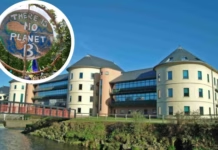
Bluestone National Park Resort – which has around 900 staff and welcomes over 150,000 guests to its luxury lodges and cottages in Pembrokeshire each year – has championed recycling for a long time and was in a strong position when the workplace recycling law started. Through careful monitoring and identifying areas for improvement, Bluestone has reduced contamination in its recycling by over 50% in the last 12 months.
Marten Lewis, Director of Sustainability at Bluestone, said: “In the year running up to the new law, we were already monitoring what was in our mixed recycling bags and had a good understanding of the waste generated and contamination levels. We checked every single bag – and we’re talking about many thousands of bags a week – so we could see what type of things were ending up in the recycling bins and identify which areas of the business could make improvements.
“So, we had a really good understanding and have continued the monitoring, which has shown that 12 months after the law started, we’ve seen at least a 50% improvement in contamination levels in our waste. This shows greater separation in the new legislation works, particularly if well communicated.”
With recycling working effectively and contamination levels reduced, the team is shifting its focus to general waste. By changing from black to clear bags, they can monitor, identify and further reduce general waste and further improve recycling. They are also looking at ways to turn waste into a commodity.
Marten explained: “The whole process has helped us really think about what was in our waste, even more so than we ever did before. Something that we identified through this process, was lots of hard-to-recycle plastics, like plastic film, which isn’t currently collected. We started collecting the film separately and now bail clear plastic and coloured plastic film, and work with a waste company that turns it into a commodity.”
Bluestone’s experience of the workplace law has been very positive, and Marten concluded: “If anyone is still wondering if the legislation has been a good thing, or if it is worth all the work, it’s definitely been really helpful for Bluestone. It’s helping us to reduce our general waste levels, which will help us save us money, increase our recycling rate and reduce our carbon footprint as we go further down the net zero journey.”
Top tips from Marten:
- “Colour coding and visual consistency across the resort is really helpful – so in lodges, outlets and around Bluestone. To make it as easy as possible for Bluestone’s 900 staff, the bins onsite are the same colour as those used in Pembrokeshire County Council, which made it easier for the staff when the new system was introduced because the resort was using colour-coding they were familiar with from their household waste.”
- “Changing from black bags to clear bags for general waste. This has helped our environment team collecting the bins and manage the waste in the compound, as it’s much easier to see what’s inside and identity any contamination without having to open a bag. As well as helping with monitoring, it also makes visitors more conscientious as there’s greater visibility of their actions.”
- “Look at ways to turn waste into a commodity. For example, our partnership with Nappicycle paves the paths of Bluestone.”
Huw Irranca-Davies, Deputy First Minister with responsibility for Climate Change, said: “Businesses like Bluestone have shown real commitment to supporting Wales’ recycling ambitions over the past year. Their efforts, alongside other workplaces across the country, are helping us make meaningful progress.
“As we celebrate the first anniversary of the workplace recycling law, it’s a chance to thank those who are now regularly separating and recycling their waste. It is helping us keep materials in use for as long as possible to help our economy and support our supply chains.”
The workplace recycling law requires all workplaces to separate food; paper and card; glass; metal, plastics and cartons. Paper and card can be mixed together in the same container and so can metal, plastic and cartons.
To check if your workplace is recycling correctly, go to: www.gov.wales/workplace-recycling

| [donate]
| Help keep news FREE for our readersSupporting your local community newspaper/online news outlet is crucial now more than ever. If you believe in independent journalism,then consider making a valuable contribution by making a one-time or monthly donation. We operate in rural areas where providing unbiased news can be challenging. |