













From charming Victorian terraces to post-war council houses and modernist glass-walled builds, Britain boasts one of the most diverse residential architectural landscapes in the world.
This diversity doesn’t just make for beautiful streetscapes—it also presents unique challenges when it comes to measuring, designing, and renovating homes. Whether you’re planning a renovation, extension, or just want an accurate record of your property, it’s essential to understand that no single approach suits all homes.
Each property type demands its own tailored surveying methodology. What works for a Georgian townhouse might not be suitable for a 1970s bungalow or a contemporary apartment. This is where professional surveying becomes indispensable. By using the right techniques and tools based on the property’s style, structure, and quirks, a surveyor can capture precise data that informs design and construction decisions.
Let’s explore four of the most common British property types and how their characteristics influence the surveying approach required.
Victorian and Edwardian Homes: Hidden Features and Intricate Details
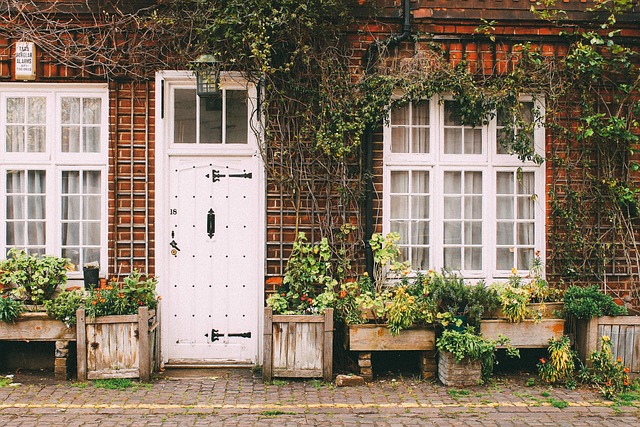
Victorian and Edwardian homes, often found in urban areas across the UK, are known for their ornate detailing, high ceilings, and solid brickwork. These properties often feature decorative cornices, fireplaces in every room, and sash windows—elements that add character but also complexity when it comes to surveying. What’s more, many of these homes have undergone decades of alterations, making original plans unreliable or obsolete.
A detailed measured survey of these properties must go beyond basic dimensions. Surveyors often use laser scanners to capture intricate internal details and irregular layouts. Chimneys, alcoves, and bay windows require special attention to ensure they are represented accurately in plans. Since these homes are often in conservation areas or may be listed, accurate documentation is also critical for planning permissions. Measured building surveys in this context become essential tools for preserving historic integrity while enabling modern upgrades.
Post-War Housing: Uniform Layouts with Subtle Variations
Post-war properties, including 1950s–1970s semis and council homes, were typically built quickly and economically to meet housing shortages. As such, they tend to have standardised layouts and materials. However, don’t let the outward uniformity fool you—these homes often hide structural variations, extensions, or outdated utilities that make a one-size-fits-all surveying approach insufficient.
In these cases, a tailored survey ensures any non-standard modifications or historical additions are properly documented. Many post-war homes have since been extended with conservatories, porches, or loft conversions, often done without updated plans. A professional surveyor needs to validate existing layouts and uncover any inaccuracies in available records.
Additionally, services like wall thickness checks and floor level assessments are crucial when planning further changes. These properties benefit from modern measured building solutions that bring decades-old documentation up to current standards, allowing for confident renovation work.
Contemporary Builds: Clean Lines and Digital Integration
Contemporary homes—those built in the last 20 years—tend to prioritise open-plan living, energy efficiency, and minimalist aesthetics. Their construction often incorporates glass, steel, and other modern materials that challenge traditional surveying tools. Unlike older homes, which can require extensive detective work, modern builds demand precision in capturing clean architectural lines and complex structural engineering.
For these properties, digital surveying methods such as 3D laser scanning and Building Information Modelling (BIM) are especially effective. These tools allow surveyors to create highly detailed digital replicas that integrate seamlessly into architectural software. This approach also supports clash detection and spatial planning before any physical work begins.
Hiring a skilled surveying company with expertise in digital technology ensures that the survey outputs are as modern as the property itself, providing a smooth pipeline from measurement to construction.
Rural and Period Cottages: Irregular Shapes and Natural Materials
Rural cottages and heritage farmhouses—often found in the countryside of Cornwall, Yorkshire, and the Lake District—pose a different set of challenges. Their charm lies in their individuality: sloping floors, exposed beams, thick stone walls, and extensions added over centuries. While these features are visually appealing, they make accurate surveying particularly demanding.
Conventional tape-measuring methods fall short in these cases. These properties often require hand-in-hand use of traditional techniques and digital scanning to map out irregularities in walls, rooflines, and interior spaces. According to Terrain Surveys, the data must be interpreted with a sensitive understanding of natural materials like timber and stone, which behave differently than modern construction materials. Surveyors must also consider how to preserve historical features while enabling modern use—especially when preparing for insulation upgrades or discreet extensions. Accurate surveying ensures that the final renovation respects both the aesthetics and structural integrity of the original building.
Every Home is Unique—And Your Survey Should Be Too
The wide variety of British homes is one of the country’s greatest assets, but it also means that cookie-cutter approaches simply don’t work when it comes to surveying. Whether your property is a centuries-old cottage or a state-of-the-art new build, the surveying method must be adapted to match its unique form and function.
If you’re planning any kind of construction or renovation, make sure the professionals you hire understand this diversity. Choose a team experienced in conducting tailored measured building surveys that go beyond surface-level data. A precise, context-aware survey not only safeguards your budget and timeline—it also helps ensure your home’s next chapter is written with clarity and care. Working with the right surveying provider could be the smartest first step in your project journey.

| [donate]
| Help keep news FREE for our readersSupporting your local community newspaper/online news outlet is crucial now more than ever. If you believe in independent journalism,then consider making a valuable contribution by making a one-time or monthly donation. We operate in rural areas where providing unbiased news can be challenging. |