















- Fridge-freezers top the list as the most expensive household appliance to run, costing UK households £73.64 annually.
- Cold appliances make up three of the top five energy-hungry devices, with chest freezers costing £72.83 per year.
- Desktop computers show a 9% increase in energy consumption since 2019, opposite of the trend of improved efficiency seen in most other appliances.
A new study has revealed that the most expensive household appliance to run in UK homes is the fridge-freezer. The research, conducted by house buying experts housebuyers4u, analysed data from the UK Department for Energy Security and Net Zero to identify which appliances cost households the most to operate annually.
Ranking as the most expensive appliance to run are fridge-freezers. Fridge-freezers cost UK households £73.64 annually and the total number of these appliances in households is up 8.60% from the 2019 figure, showing a rate of increase despite improvements in energy efficiency.
The UK’s appliance statistics show that cold appliances are the most costly category with three of the top five most expensive appliances to run. This is due to these appliances running continuously throughout the day and night, unlike other appliances that are used intermittently.
Chest freezers, often used as a supplemental appliance, rank second. These large, horizontal freezers with a top-opening lid cost £72.83 per year to run. Chest freezers saw a slight decrease in ownership from 2019 to 2023 by 2.08%.
Washing machines cost UK households £60.80 annually because of regular usage and water heating requirements. The number of washing machines that are now in households has increased by 3.48%.
Upright freezers cost £59.06 annually to run, making them the fourth most expensive appliance. The number of upright freezers decreased from 2019 to 2023 by 1.62%.
Dishwashers have seen the biggest increase in the top five, with the number of dishwashers up 12.97% since 2019. The annual cost per dishwasher is calculated to be £56.86 with an average dishwasher lifetime cost equivalent to £568.60 over a ten-year period.
Top 10 Most Expensive Household Appliances to Run
| Rank | Appliance | Percentage change in number of appliances from 2019-2023 | Percentage change in annual household consumption from 2019-2023 | Average annual cost |
| 1 | Fridge-freezer | 8.60% | -13% | £73.64 |
| 2 | Chest freezer | -2.08% | -18% | £72.83 |
| 3 | Washing machine | 3.48% | -7% | £60.80 |
| 4 | Upright freezer | -1.62% | -14% | £59.06 |
| 5 | Dishwasher | 12.97% | -7% | £56.86 |
| 6 | Electric hob | 7.43% | -3% | £46.16 |
| 7 | Desktop computer | -11.39% | 9% | £46.13 |
| 8 | Kettle | 3.52% | 0% | £43.39 |
| 9 | TV – Plasma display panel | -99.09% | -2% | £38.23 |
| 10 | Refrigerator | -17.74% | -16% | £32.44 |
Electric hobs rank sixth on the list of most expensive appliances, costing £46.16 annually. The number of electric hobs has increased by 7.43% since 2019, while their energy consumption has only decreased slightly by 3%.
Desktop computers are the seventh most costly appliance, with an annual cost of £46.13. Desktop computers are the only device in the top 10 to show an increase in energy consumption, rising by 9% since 2019, while the number of units has decreased by 11.39%.
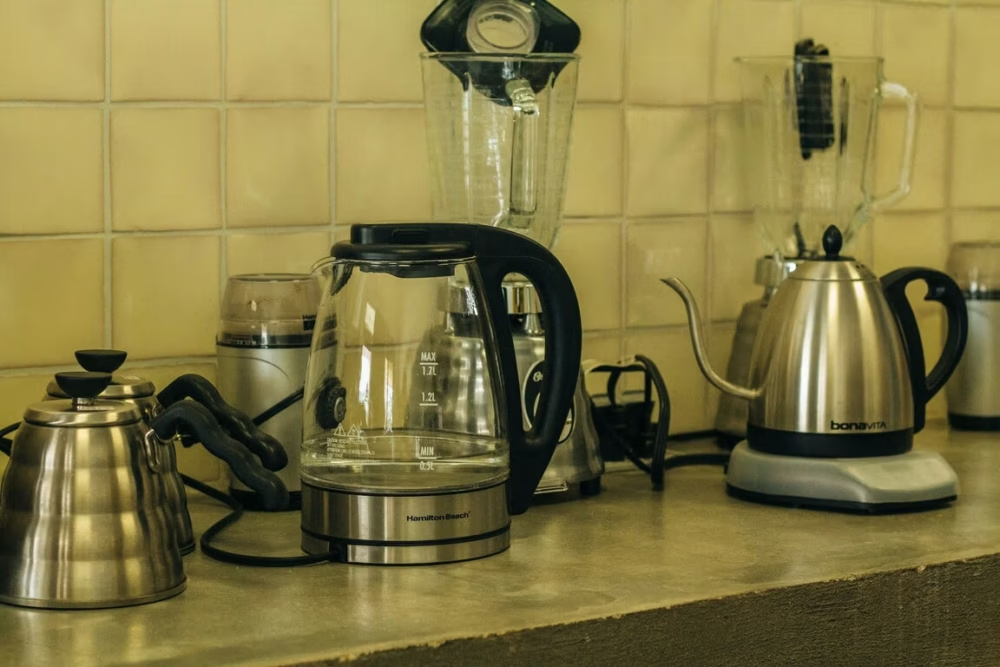
Kettles rank eighth, costing UK households £43.39 annually. The number of kettles has increased by 3.52% since 2019, while their energy consumption has remained unchanged.
Plasma display panel (PDP) televisions rank ninth with an annual cost of £38.23, despite seeing a dramatic 99.09% decrease in ownership as newer technologies have replaced them. Their energy consumption has decreased by only 2%.
Refrigerators complete the top 10 with an annual cost of £32.44. The number of refrigerators has decreased by 17.74% since 2019, while their energy consumption has decreased by 16%.
The data also shows that the least expensive appliances to run are primarily lighting products.
The Ten Least Expensive Household Appliances to Run
| Rank | Appliance | Percentage change in number of appliances from 2019-2023 | Percentage change in annual household consumption from 2019-2023 | Average annual cost |
| 1 | Directional LED | 191.39% | -15% | £0.38 |
| 2 | Non-directional LED | 392.47% | -28% | £0.59 |
| 3 | Power supply unit | -8.19% | -28% | £1.02 |
| 4 | Non-directional compact fluorescent lamp | -86.98% | -11% | £1.25 |
| 5 | Secondary TV – LCD | 1.97% | -6% | £1.39 |
| 6 | Printer | -4.24% | -5% | £2.19 |
| 7 | Multifunction devices | 6.89% | -4% | £2.96 |
| 8 | Vacuum cleaner | 3.88% | -30% | £3.22 |
| 9 | Directional halogen | -53.12% | 1% | £4.11 |
| 10 | Monitor | -10.01% | -15% | £4.69 |
Directional LED lights are the least expensive appliance to run, costing just £0.38 annually. The number of these lights has increased dramatically by 191.39% since 2019, while their energy consumption has decreased by 15%.
Non-directional LED lights rank second from the bottom, costing £0.59 annually. These lights have seen the most dramatic increase in adoption, with numbers increasing by 392.47% since 2019, while their energy consumption has decreased by 28%.
Power supply units are the third least expensive item to run, costing £1.02 annually. The number of these units has decreased by 8.19% since 2019, while their energy consumption has decreased by 28%.
Non-directional compact fluorescent lamps cost £1.25 annually to run. The number of these lamps has decreased by 86.98% since 2019 as households switch to LED technology, while their energy consumption has decreased by 11%.
Secondary LCD televisions complete the bottom five, costing £1.39 annually. The number of these TVs has increased slightly by 1.97% since 2019, while their energy consumption has decreased by 6%.
Paul Gibbens, Property Expert at housebuyers4u, commented on the findings:
“The data shows the significant impact that everyday appliances have on household energy bills. With the current focus on rising energy costs, understanding which appliances consume the most power can help homeowners make informed decisions.
“Cold appliances like fridge-freezers and chest freezers are unavoidable expenses as they run continuously, but the good news is that their efficiency has improved substantially. If you’re using an older model, upgrading could save you money in the long run.
“What type of appliances you use (and how you use them) matters, because different categories of devices consume electricity at vastly different rates. For instance, replacing traditional lighting with LED alternatives is one of the most effective ways to reduce energy costs.
“With energy prices likely to remain high, these small differences in running costs can add up to significant savings over time, especially in larger households with multiple appliances.”
With thanks to https://housebuyers4u.co.uk/ for sharing this content.

| [donate]
| Help keep news FREE for our readersSupporting your local community newspaper/online news outlet is crucial now more than ever. If you believe in independent journalism,then consider making a valuable contribution by making a one-time or monthly donation. We operate in rural areas where providing unbiased news can be challenging. |