














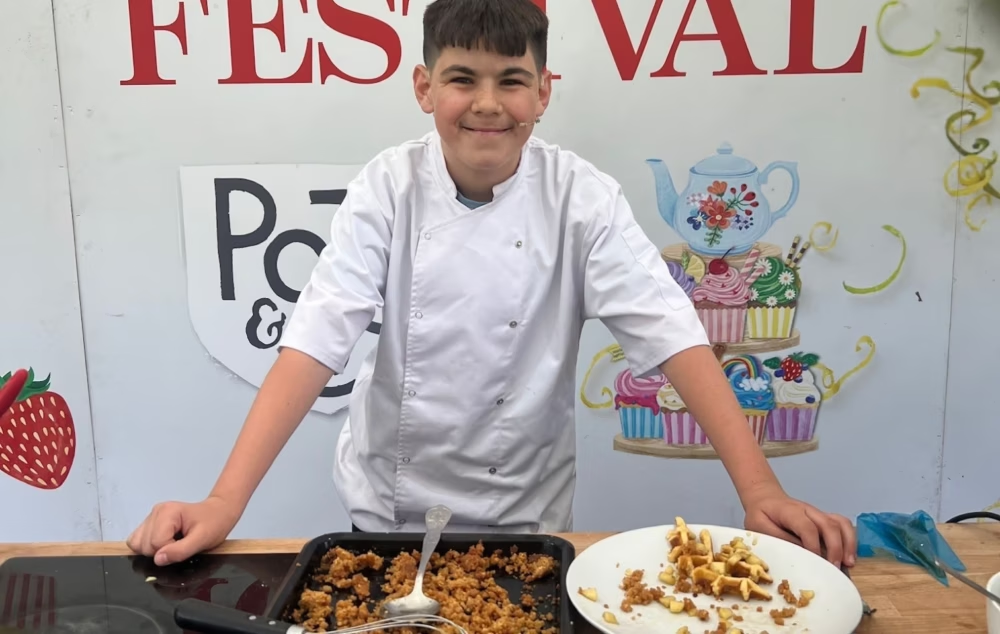

At just 15 years old, William Watters, known as @WilliamTheMiniChef on Instagram, is sharing his passion for creating simple, delicious dishes that anyone can enjoy at home.
The young aspiring chef has released his debut cookbook, taken to the stage at Cheltenham Food Festival and Foodies Festival at Royal Victoria Park, and even cooked for a pub in Bradford-on-Avon.
“One of my ambitions for the future is to be a well-known head chef,” William told the BBC, highlighting toad in the hole as one of his favourite dishes to make.
Mimi Morley, Senior Recipe Development Manager at food box delivery service, HelloFresh, says William’s story highlights both the value of starting young and the accessibility of cooking at any age. “It’s clear that getting hands-on experience in the kitchen early can give a real sense of confidence and curiosity,” she comments.
She emphasises that parents play a crucial role in showing children the basics and making sure cooking is a regular part of family life.
“It’s far more effective to do a little more often than doing a lot at once,” she notes. “Small tasks like chopping vegetables or mashing potatoes under an adult’s supervision can make the process enjoyable and doable, rather than overwhelming.”
Research from HelloFresh shows that many teens lack basic kitchen experience. Alarmingly, one in five teens has never used a potato masher, and nearly one in five have never used a whisk, highlighting a growing gap in everyday kitchen skills. Teens are turning to convenience foods instead of cooking from scratch.
Mimi’s no-nonsense tips for teaching children to cook.
When it comes to teaching kids to cook, Mimi recommends putting greater emphasis on ages 10 to 13, when children can follow instructions more easily and start taking real responsibility, though basic tasks can be introduced as early as five or six.
1. Set a dedicated cooking date
Set a non-negotiable cooking date with your child, whether weekly, bi-weekly or monthly.
Mimi acknowledges that families are busy, but stresses the importance of treating it like any other scheduled activity, such as a football or dance class. “It doesn’t have to be long or elaborate,” she says, “but making time regularly shows the value of cooking and helps build lasting habits.”
She adds that confidence shouldn’t be a barrier. “You don’t need to be an expert to cook with your child,” Mimi points out. “In fact, making mistakes in the kitchen can be one of the best ways to learn, where trial, error and problem-solving become part of the process.”
2. Praise your child for cooking
Positive reinforcement matters more than perfection. Mimi mentions that praise shouldn’t be reserved for the finished dish. “Children respond best when they feel genuinely recognised,” she explains. “Comment on their effort, their focus, or even how they handled a tricky step. It’s about showing pride in the process, not just the result.”
She adds, “This doesn’t just mean a quick ‘well done’ throughout. Show them you’re genuinely proud by bringing it up later in the day, telling other family members, or rewarding them with something unrelated to food like a fun family day out. That kind of encouragement helps build a lasting, positive link between effort and achievement.”
3. Cater to what they like (somewhat)
While exploring new ingredients is important, Mimi stresses the value of starting with dishes children are already excited about. “Engagement is everything,” she highlights.
She adds that familiar recipes serve a bigger purpose than just convenience. “If a child loves what they’re cooking, they’re far more likely to stick with it. Start with meals they know and enjoy, like spaghetti bolognese, tacos or homemade pizza, before branching out.”
Mimi says, “They’re less likely to resist, and succeeding with something they already know helps them feel more confident and capable. Once at ease, they’ll become more willing to put their own creative twists on a dish.”
4. Repetition builds true confidence
Mimi warns that one of the biggest mistakes parents make is moving on too quickly. “Children learn best through repetition,” she insists. “Introducing new dishes before they’ve grasped the basics can leave them feeling overwhelmed and discouraged.”
She continues, “Focus on one to three simple meals they enjoy, repeat them regularly, and step back slowly as they grow more capable. For example, give prompts instead of instructions, and celebrate when they remember a step on their own. It’s not only about following a recipe. By repeating dishes, children start to grow more at ease and familiar with the steps. Over time, the goal is for them to take on most of the process on their own,” she explains.

| [donate]
| Help keep news FREE for our readersSupporting your local community newspaper/online news outlet is crucial now more than ever. If you believe in independent journalism,then consider making a valuable contribution by making a one-time or monthly donation. We operate in rural areas where providing unbiased news can be challenging. |