















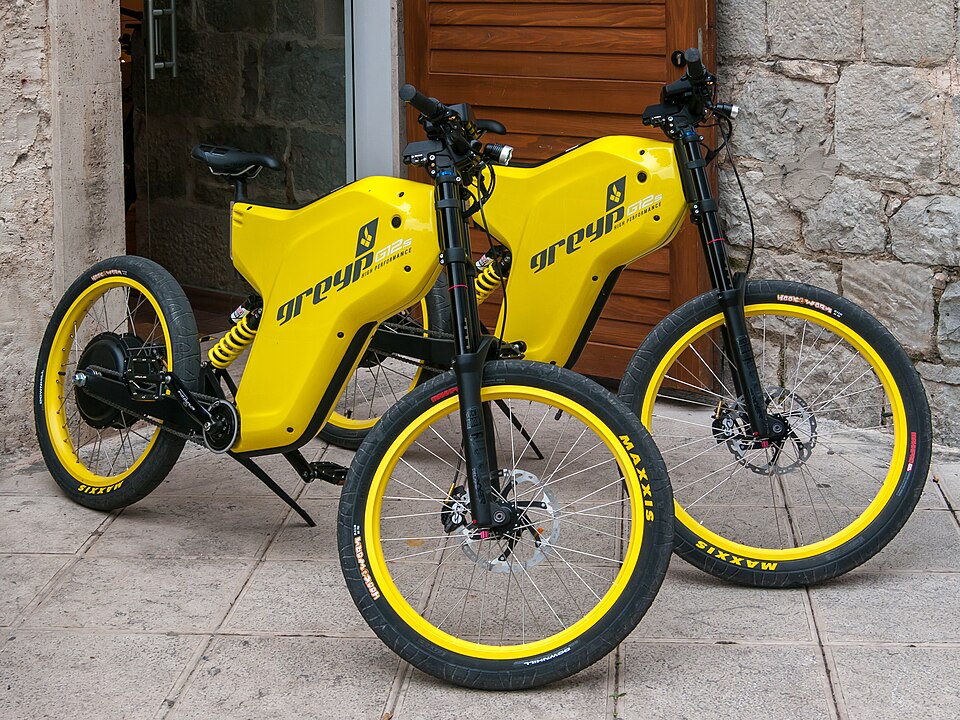

Nearly a quarter of Brits (23%) do not cycle because it is too hilly where they live
Swytch Technology, the UK’s leading e-bike conversion company, list five of the Tour’s hardest climbs made easier using a e-bike
The Tour de France is the most watched sporting event every year, and it’s not hard to see why, with some of the finest athletes in the world battling up some of the steepest (and most beautiful) mountains. But even if you’re a professional, cycling can be a real pain, with some ex-pros claiming that, even at the biggest races cyclists were known to use hidden electric motors in their bikes to help them scale climbs. Speaking to this, research commissioned by Swytch Technology, the UK’s leading e-bike conversion company, found that nearly a quarter (23%) of Brits do not cycle because it is too hilly where they live. Luckily for non-professionals, who don’t have to worry about breaking any rules, Swytch has developed the Swytch Kit to help you cycle for longer, even up the five hardest climbs at the Tour de France.
The Swytch Kit, which can convert any conventional bike into an e-bike, makes climbing up hills and commuting a breeze for those days when you just want an easier ride. The pocket-sized Swytch Kit battery can be turned on or off at any time, allowing you to use the extra electrical assistance only when you need it, without the significant weight penalty from a regular e-bike’s larger battery.
The five hardest climbs at the 2024 Tour de France:
Col du Galibier: 22.9km at a 5.1% average incline
It may not be the steepest climb at the Tour this year, but it’s certainly the highest, topping out at over 2600 meters, and one of the most famous. This climb, steeped in history, may only arrive on Stage 4, but that doesn’t diminish the difficulty of this Col.
Col du Tourmalet: 18.9km at a 7.4% average incline
The Tourmalet is the most climbed hill in the history of the Tour, with the race having summiting the climb for the 80th time this year. Literally translating to “bad trip” in French, need we say more?
Pla d’Adet: 10.6km at an 8% average incline
Unfairly underrated by us cycling buffs, this climb isn’t particularly long, or even particularly steep, but with consistent gradient changes, this col really isn’t for the faint hearted. The pros will have just tackled the Tourmalet before taking on this mountain, making the leg sapping climb even harder!
Cime de la Bonette: 23.1km at a 6.8% average incline
Featuring right towards the end of the Tour on Stage 19, the Cime de la Bonette is, simply put, very, very long. We would argue that this is probably the hardest mountain at the Tour in 2024.
Portet d’Aspet: 4.4km at a 9.7% average incline
With a maximum gradient of an eye-watering 14.4%, the Portet d’Aspet is not be the longest climb, and isn’t even noted by the Tour de France organisers as one of the very hardest climbs, but being the steepest at the race, it surely belongs on this list.
Le Plateau de Beille: 15.7km at a 7.8% average incline
Featuring at the end of the hardest stage (the “Queen Stage”) of the Tour, having already climbed nearly 4000 meters, Le Plateau de Beille subjects the cyclists to over 1000 meters of extra climbing. The racing will be hard here, and the legs will be burning.
Whilst having different levels of fitness could be a barrier for some when it comes to cycling and climbing steep hills, Swytch have devised a solution that allows you to keep you going. The Swytch Kit can be fitted to any conventional bike and can be switched on or off at any time. E-bikes are as much fun as any conventional bike, allowing you to climb up the steepest hills, and whilst it is less strenuous on the body, e-biking still helps you burn 70% of the calories that you would from traditional cycling, according to an AMCA study. The Swytch kit dramatically reduces the price of quality e-bikes, with prices starting from £549, enabling anyone to ride electric for as little as 0.4 pence per mile by up-cycling their existing bike.
About Swytch
Swytch was founded by engineers Oliver Montague and Dmitro Khroma in 2017 in response to an obvious gap in the market for a sustainable transport solution. The idea first developed when Oliver was cycling to his workplace to meet with his boss. Despite traveling similar distances, Oliver had broken into a sweat whereas his boss arrived impeccably dressed, simply because he was on an e-bike.
Oliver now plays a pivotal role as head of the company as CEO and Dmitro leads a world-class London-based engineering team as CTO. Already saving 17,000 tonnes of carbon dioxide emissions from previous models, Swytch believes that transport shouldn’t cost the Earth – so they’ve made it their mission to make electric transport accessible to everybody.

| [donate]
| Help keep news FREE for our readersSupporting your local community newspaper/online news outlet is crucial now more than ever. If you believe in independent journalism,then consider making a valuable contribution by making a one-time or monthly donation. We operate in rural areas where providing unbiased news can be challenging. |