












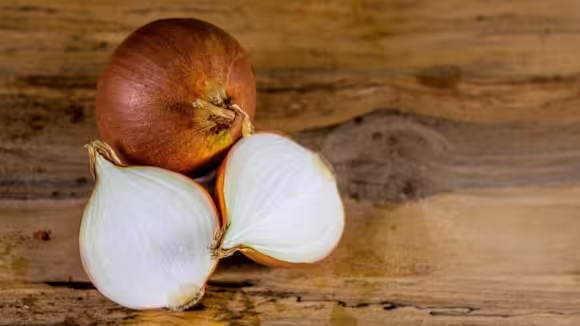
| With food prices a hot topic of conversation, it’s no surprise that many of us are trying to keep their food fresh for longer to avoid trips to the shop to buy replacements. Many fresh foods can be tricky to keep fresh and safe to eat for long periods of time, and people are understandably concerned about eating food which is past its best in case it causes harm. |
| To help us keep food fresh for longer and store it in the safest possible way, the team at food hygiene training experts High Speed Training have shared advice on how to safely and effectively store a staple of the British pantry, the humble onion. Dr Richard Anderson, Director of Learning at High Speed Training says: “A lot of food hygiene myths exist about storing onions; and whilst some are true, many others are not. For example, whilst it’s true that onions and potatoes should not be stored together, it’s not true that chopped onions cannot be stored in the fridge. Should whole onions be stored in the fridge? Dr Anderson says: “The fridge isn’t the best place to store whole onions, they are best kept in cool, dark areas, away from moisture and humidity. Onions absorb the moisture around them, so storing them in the fridge runs the risk of them becoming soft and mushy, whilst storing in a cool, dark place will ensure they’re crisp and fresh.” So what else do you need to know about storing onions? High Speed Training share six top tips: – Don’t store onions and potatoes together Onions and potatoes release gases and moisture that cause the other to sprout quicker. By storing them together you’ll reduce the life of both the onions and potatoes. – Don’t store them in plastic bags Onions last longest when air is able to circulate around them. By storing the onions in a plastic bag, you will restrict air circulation, which accelerates spoilage. – Store onions on the countertop One of the best spots for storing your onions is keeping them in a bowl on the worksurface. This area should be well-ventilated, away from heat and away from other veg, which will prevent spoilage caused by the gases given off by the onions. The one exception to this is garlic, which can be stored alongside onions without any issues. You CAN safely store cut onions It’s a common food hygiene myth that sliced onions cannot be kept safely, but this is incorrect. In fact, onions actually have an acidic surface with sulphur compounds, which slow bacterial growth compared to other foods. They’re not immune though! Like with any other food, leaving them exposed for too long eventually leads to degeneration and contamination. – Use an airtight container to keep chopped onions safe In contrast to whole onions, which need to be kept in a ventilated area, to safely store chopped onions, you should keep them in a zip-lock bag or airtight container. When stored in the fridge these can last for around a week before deteriorating in quality. Just make sure the container is fully sealed to prevent the onion smell from tainting other foods. – Freezing onions Onions can also be safely frozen. To do this, make sure to wash, peel, and chop them up, and put them in a freezer bag. Push out air as much as possible and make sure the bag is completely sealed (consider using tupperware instead). However, it’s important to be aware that onions – especially when first frozen – smell strong, and the odour can leak out and taint other foods. Learn more about High Speed Training’s food hygiene courses, and advice on storing food safely by visiting the High Speed Training Hub |

| [donate]
| Help keep news FREE for our readersSupporting your local community newspaper/online news outlet is crucial now more than ever. If you believe in independent journalism,then consider making a valuable contribution by making a one-time or monthly donation. We operate in rural areas where providing unbiased news can be challenging. |