













Your Next Favorite Creator Might Not Be a Person
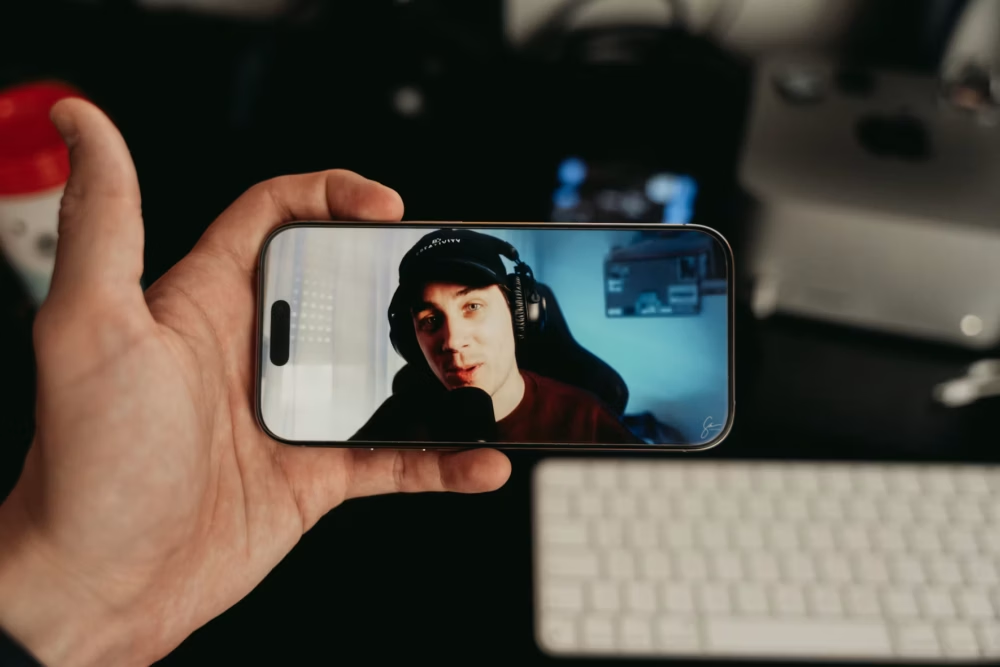
Scroll your feed for ten minutes and you’ll probably meet a creator who isn’t human. They review products. They share career tips. Some host their own little podcasts. And more and more of them are openly virtual, built with AI images, video, voice, and a lot of storytelling.
My first reaction was a shrug. Another internet gimmick, right?
Then I looked closer, and I changed my mind. The interesting part isn’t the technology. It’s who gets to build a media brand now.
First, What Is an AI Influencer?
Simple version: a fictional or virtual character that posts content and talks to an audience. It could be a realistic digital person, a stylized 3D character, an animated mascot, or a brand-owned host.
A few names come up again and again:
- Lil Miquela is one of the earliest virtual influencers people point to when they say “this can work.”
- Lu do Magalu is a virtual character tied to the Brazilian retailer Magazine Luiza, often cited as a big commercial success. One 2026 industry summary puts her sponsored revenue around $2.5 million a year. That’s third-party reporting, so treat it as a headline number, not a benchmark for the rest of us.
- Aitana Lopez is another name that keeps showing up in creator-economy coverage.
Here’s the honest part: most new virtual-character accounts will not look like Lu. These are inspiration, not a promise.
Myth vs. Reality
Myth: “Make a pretty AI face, post daily, money arrives.”
Reality: A virtual creator needs exactly what a human creator needs: a clear niche, a point of view, consistency, trust, and a reason for people to come back. AI makes production faster. It doesn’t replace any of that.
If you remember one thing from this issue, remember this: people follow usefulness, not realism.
The Part Most Guides Skip: The Persona Card
The accounts that fall apart usually do it the same way. The face changes. The tone changes. The story changes. Followers can’t tell who they’re listening to, so they leave.
Fix: write a one-page “persona bible” before you generate a single image.
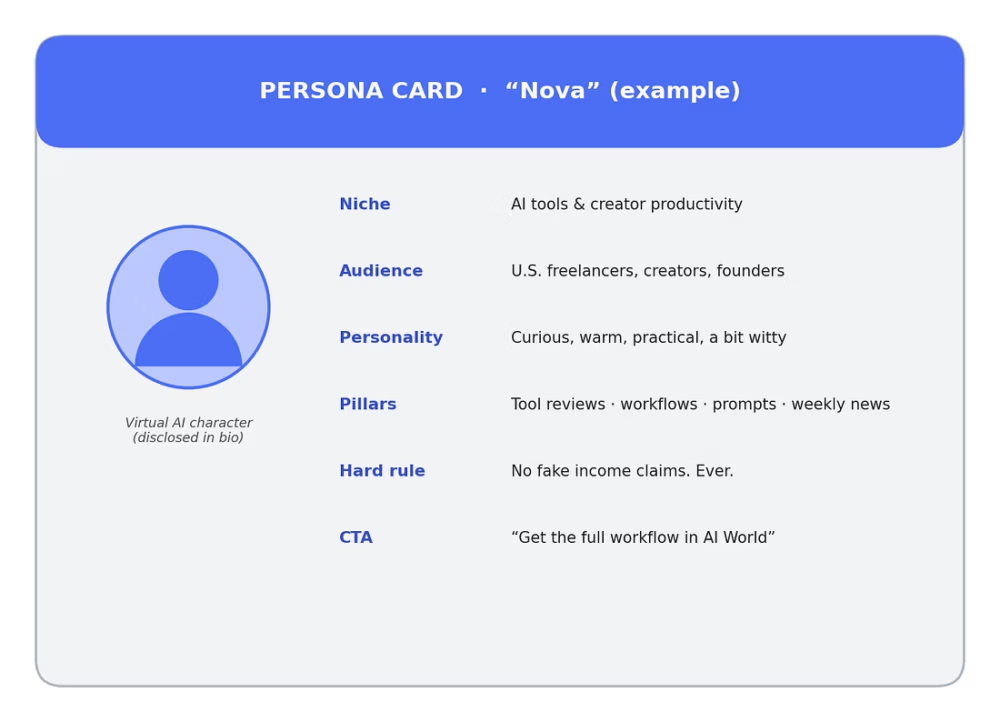
Notice that most of the card isn’t about looks. It’s niche, audience, personality, rules, and a call to action. A consistent point of view matters as much as a consistent face.
What Does the Work Actually Look Like?
For a character like Nova, the example above, a normal week might be:
- A LinkedIn post with one workflow that saves time
- A 30-second Reel demoing a tool
- A full newsletter issue (that’s this one, in spirit)
- An X thread comparing two tools
- A YouTube Short with one copy-paste prompt
- A Sunday poll: “Which tool should I test next?”
The production stack is usually: script with a writing AI, visuals from an image tool, motion from an avatar or video tool, voice from a voice tool, then captions and a real edit. Then a human reviews it before anything goes out.
How People Actually Make Money (In a Sensible Order)
Brand deals are what everyone thinks about first. They’re usually the last thing that works, because brands want proof of an engaged audience.
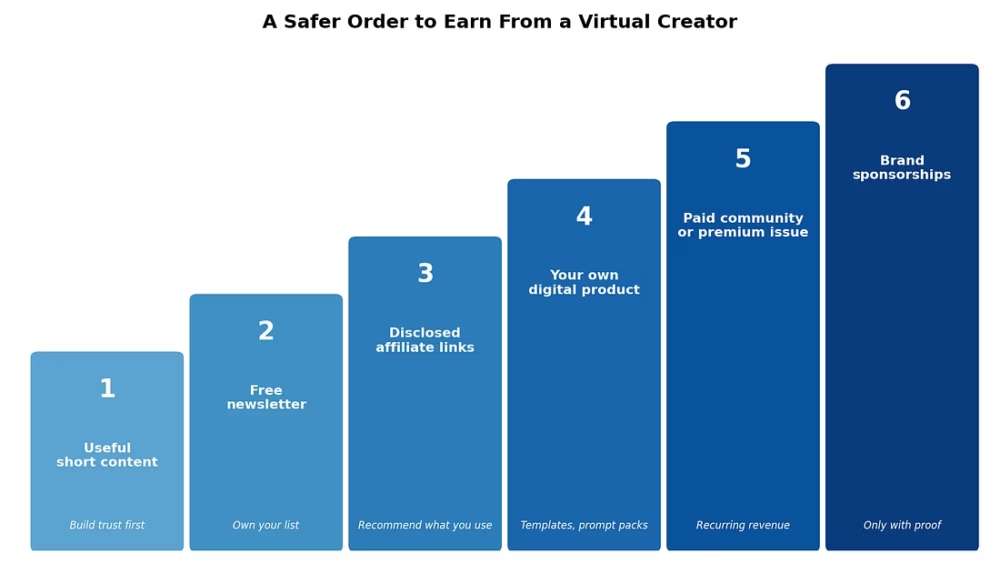
A calmer path: build trust with useful short content, grow a free newsletter you own, recommend tools you genuinely use (with clear disclosure), then sell something of your own like templates or a prompt pack. Sponsorships come once you have numbers to show.
Creator-economy reporting keeps pointing the same direction: owned products, subscriptions, and affiliate partnerships tend to hold up better than sponsorships alone.
The Trust Checklist (Please Read This One)
This is where AI creators win or lose long-term. Virtual doesn’t mean you can be vague about what’s real.
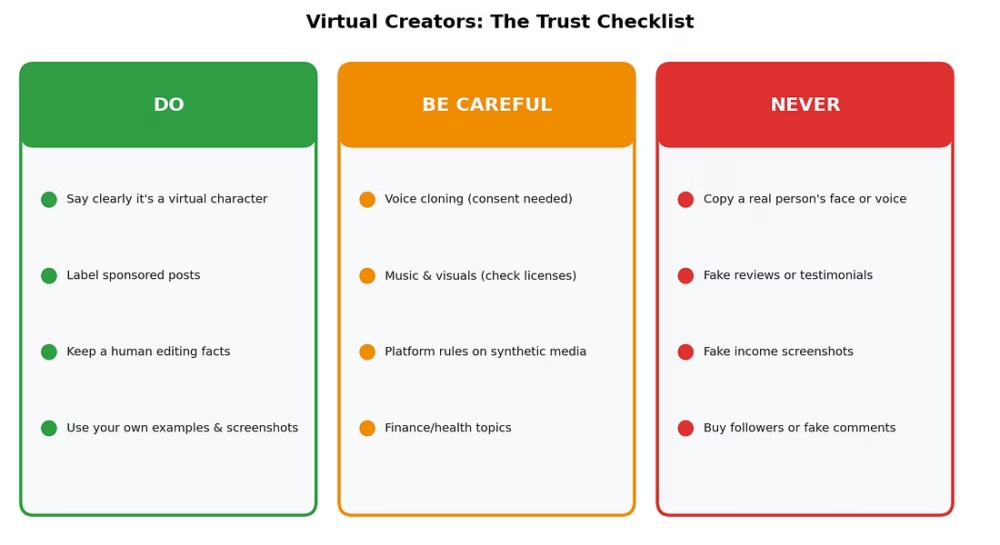
A few plain rules:
- Say it’s virtual. Put it in the bio. Something like: “Nova is a virtual AI character created and operated by AI World. A human editor reviews the content.” Being upfront can even become part of the brand story.
- Label sponsored content and follow your platform’s rules plus the advertising rules where you live. In the U.S. that includes FTC guidance on endorsements and fake reviews, so it’s worth reading.
- Never use a real person’s face or voice without their consent. No lookalike celebrities, no cloned coworkers.
- No fake results. No made-up testimonials, no invented income screenshots, no “I made $100,000 this week.” A character can be fictional. Its claims can’t be.
- Don’t build on spam. Fake comments, fake followers, and sneaky DMs are how accounts get banned.
Who This Is Really For
- Founders and writers with great ideas who’d rather not be on camera
- Newsletter creators who want a recognizable mascot or host
- Small businesses tired of paying for a new photo shoot every week
- Anyone who wants to test a media brand without a studio
And who it’s not for: anyone hoping for a button that prints money. That button doesn’t exist.
If You Want a Structured Way to Build One
Reading about this is one thing. Actually building a character, a content system, and a monetization plan is another, and a lot of people want a guided path.
One option I came across is the AI-Influencer System, a member-area course with video lessons on building a virtual creator brand: persona, visuals, content, and monetization.
course
A few honest notes before you click:
- This is an affiliate link. If you buy through it, the sender of this article may earn a commission at no extra cost to you. That’s what helps keep this newsletter running.
- No course can promise income. Anyone who guarantees results is selling you a fantasy. Your results depend on your niche, consistency, and effort.
- Read the sales page and the refund policy first. Know exactly what’s included before you pay.
- Think of it as a shortcut to structure, not a shortcut to money.

| [donate]
| Help keep news FREE for our readersSupporting your local community newspaper/online news outlet is crucial now more than ever. If you believe in independent journalism,then consider making a valuable contribution by making a one-time or monthly donation. We operate in rural areas where providing unbiased news can be challenging. |