













Climbing plants are great for small outdoor spaces as they transform walls, fences, and trellises into lush, blooming areas without taking up ground space. Perfect for patios, balconies, and compact gardens, it is the ideal way to add greenery and flowers vertically and grow upwards if your garden has a small footprint. Choosing the right climbing plants has been made easy as the British Garden Centres team has put together these top options that anyone can start growing now.
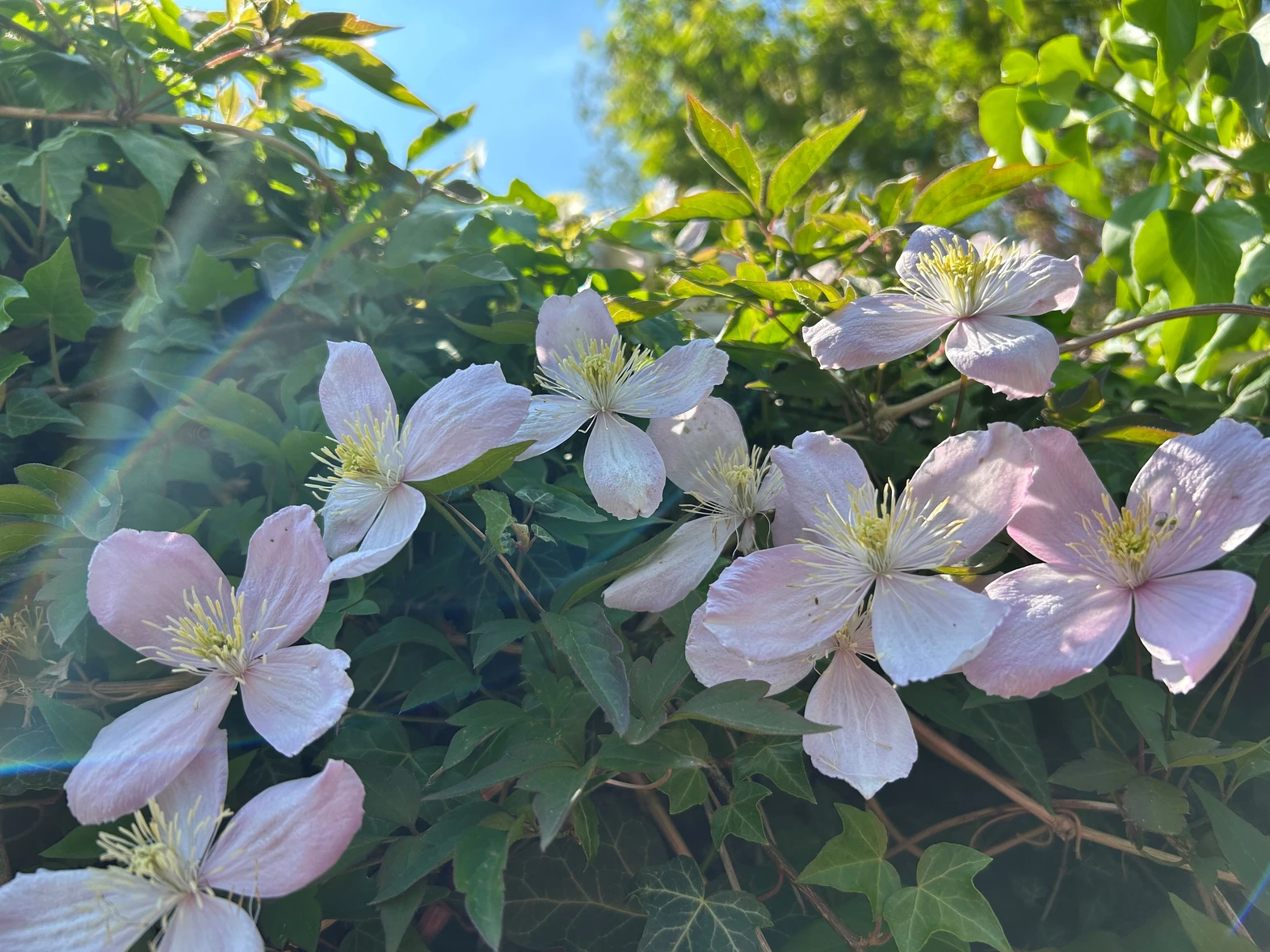
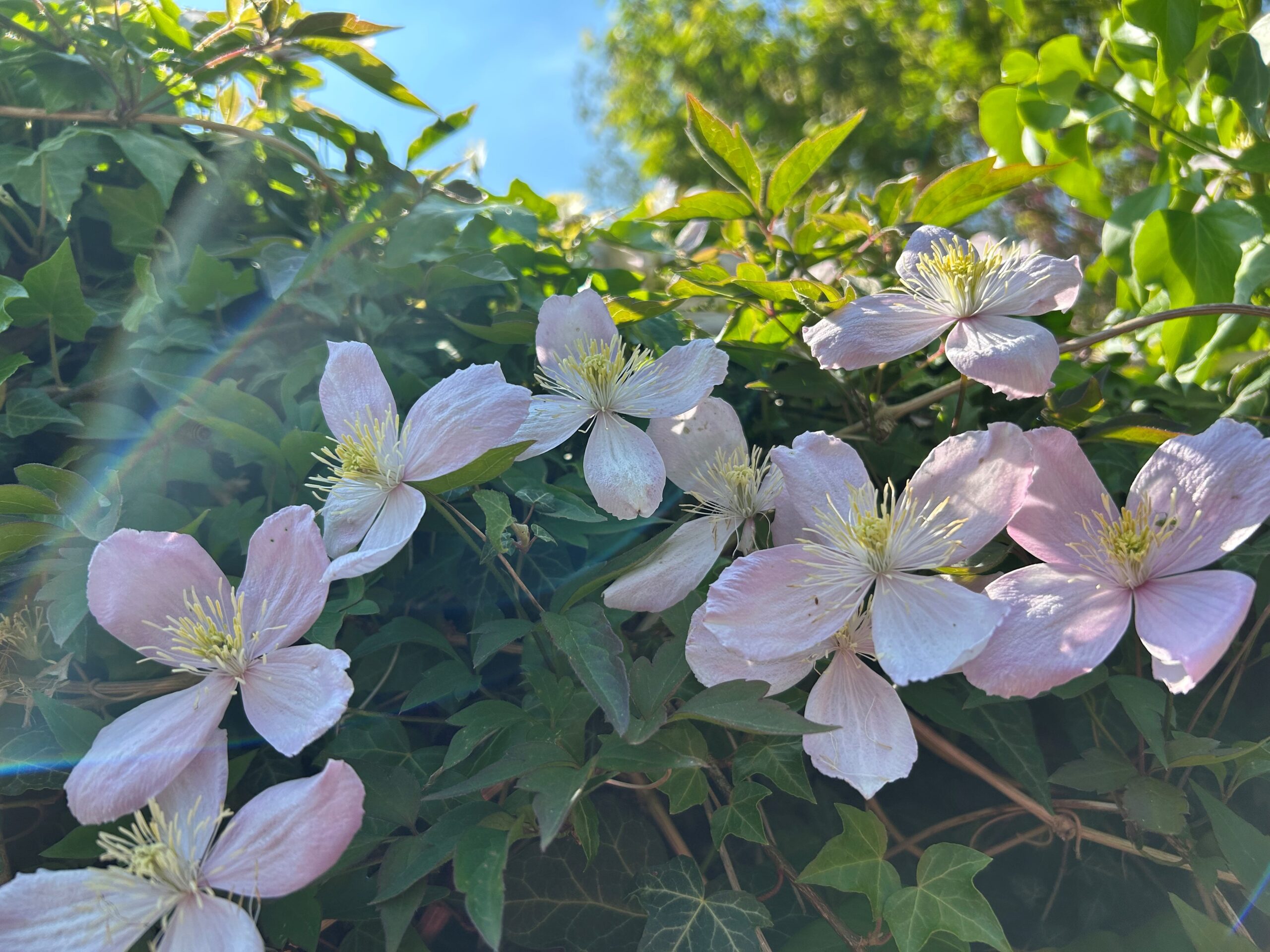
Clematis: Clematis are popular climbing plants and come in pale blush tones to deeper shades of cerise. Many clematis are fragrant flowers from spring through summer, making them ideal for trellises and walls. Clematis Montana is one of the earliest to flower from April and has pretty pink or white blooms, adding colour and scent to your garden early in the year. It prefers a sunny or partly shaded spot with well-drained soil and doesn’t need much pruning, just a light trim after flowering to keep it tidy. This plant is easy to care for and can quickly transform bare walls or fences into a lush, flowering display.
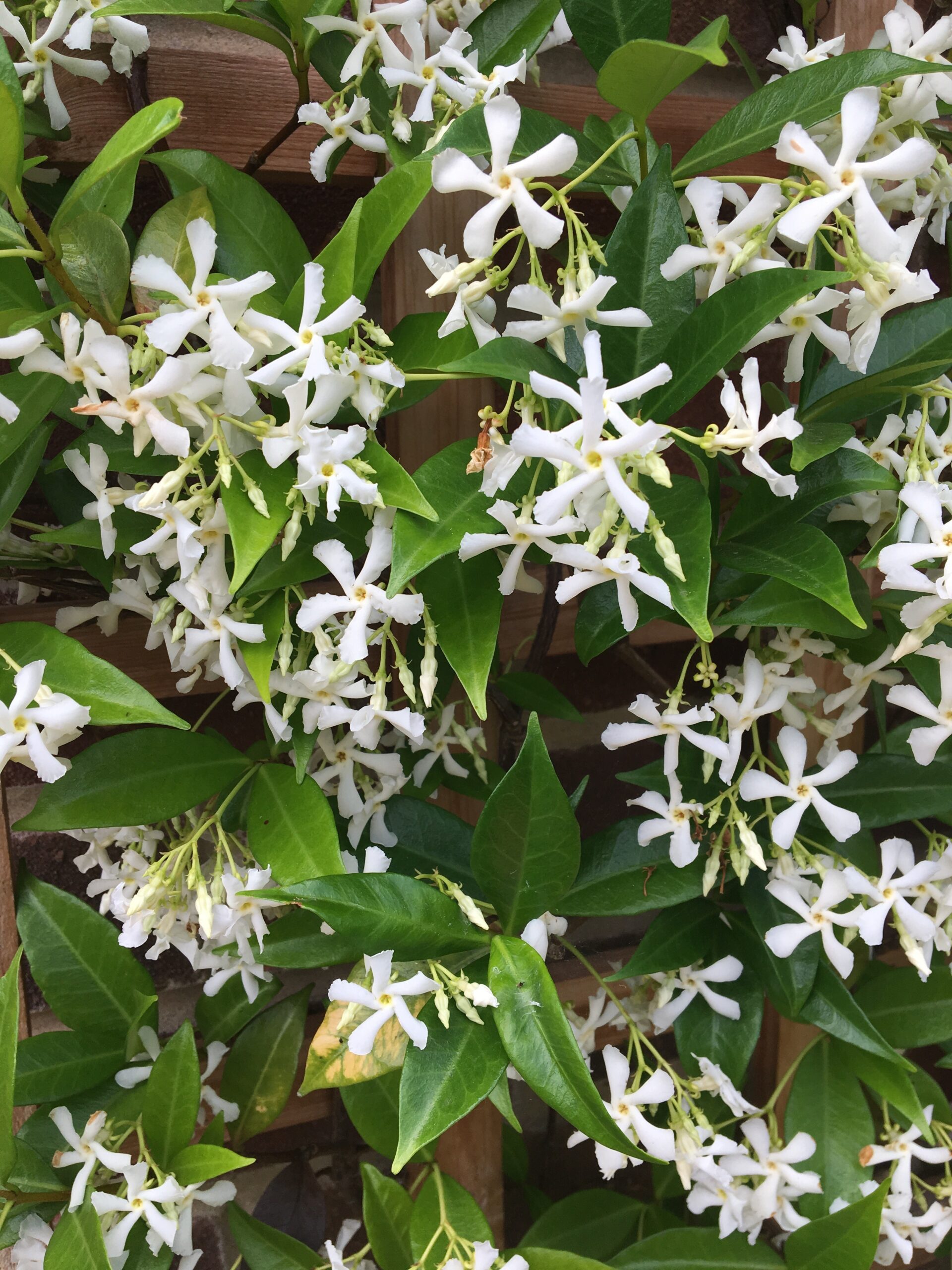
Trachelospermum: Also known as Star jasmine, Trachelospermum jasminoides is an easy-to-grow, evergreen climber with shiny green leaves and sweet-smelling, star-shaped, white flowers throughout the summer. It can be grown in the ground or a container and likes a sunny or partly shaded spot and needs something to climb on, so it is perfect paired with a trellis or fence. If planting in a pot, we recommend a container that is at least 45–60 cm in diameter and 40–50 cm deep, to give the roots ample space to grow. Container jasmine will also need more regular feeding during the growing season and watering than in the ground.
It thrives in well-drained soil and doesn’t need much care, just make sure you water during dry spells and give it a little feed in spring. It is evergreen too, all year, so it will provide you with foliage throughout the seasons. As colder weather sets in, move the pot to a protected area in winter to prevent frost damage.
Passiflora: Commonly known as the passion flower, this is a showstopping, easy-to-grow climbing plant with unusual, beautiful flowers that bloom profusely from summer to autumn. Passiflora basks in full sun and grows best along a trellis, fence or up a pergola. Water it regularly, but don’t let the soil get too wet as it hates being waterlogged. We recommend feeding it in spring and summer and pruning it in late winter to keep it healthy.
Climbing roses: Roses are another excellent choice, and there are many varieties with delicate pink flowers or a bolder magenta. They work well on pergolas, archways or fences and often bloom repeatedly throughout the season when deadheaded. Beautiful climbers with fragrant flowers, some with minimal thorns (like ‘Mortimer Sackler’). These climbers rely on thorns to hook onto supports, so you might need to help them by tying some branches to your fence. Water regularly, especially during the first year, and fertilise in spring. Climbing roses prefer full sun and well-drained soil.
Honeysuckles: These are charming twining climbers that bring your garden to life with their beautiful, nectar-filled tubular flowers, often in lovely shades of pink, red, orange, yellow, cream, and purple. Their sweet fragrance fills the air for weeks, attracting bees and butterflies. They’re incredibly easy to grow in sunny and part shade, as well as being low maintenance-once settled, they’ll happily thrive with very little care. Just give them a good prune after flowering to keep their size in check.
Sweet peas: These uplifting blooms are lovely, easy climbers with colourful, sweet, perfumed flowers that brighten up any garden. You can grow them from seeds or buy young plants and give them a sunny spot with well-drained soil and something to climb on, like a trellis, obelisk or bamboo teepee. Water them regularly, pinch out the tips when they’re small to help them grow bushy, and remove old flowers to keep them blooming longer. They make great cut flowers too and can be taken indoors to fill your home with beautiful, fragrant blooms all summer.
Wisteria: Wisteria is a beautiful climbing plant that produces long, fragrant flower clusters in spring. It loves sunny spots and needs strong support like a fence or pergola because it grows heavy and fast. To keep it healthy and blooming for longer, we recommend you prune it twice a year-once in winter and once in summer. It might take a few years to flower, but with some patience and care, it will fill your garden with cascades of stunning purple and white flowers, evoking a romantic and Victorian feel in your outdoor space.
Julian Palphramand, Head of Plants at British Garden Centres, said: “Climbing plants are a great way to make your garden look beautiful quickly. They can cover plain walls or fences with flowers and leaves, adding colour and greenery. Many also help attract bees and butterflies, and they are easy to grow, being perfect for creating privacy or softening hard spaces, bringing a lovely natural feel to your outdoor area.”
British Garden Centres (BGC) is the UK’s largest family-owned garden centre group with 73 centres around the country. The group is owned and led by the Stubbs family, who also own and operate Woodthorpe Leisure Park in Lincolnshire.
BGC was launched in 1987 with the opening of Woodthorpe Garden Centre by brothers Charles and Robert Stubbs. Since 2018, it has expanded rapidly with the acquisition of 50 garden centres, allowing it to grow from its heartland to the business it is now, with 73 garden centres spread from Carmarthen to Ramsgate, Wimborne to East Durham.
The group has a team of 3000 colleagues working across the garden centres, restaurants, growing nurseries, distribution centres, Woodthorpe Leisure Park, and Woody’s Restaurant & Bar.

| [donate]
| Help keep news FREE for our readersSupporting your local community newspaper/online news outlet is crucial now more than ever. If you believe in independent journalism,then consider making a valuable contribution by making a one-time or monthly donation. We operate in rural areas where providing unbiased news can be challenging. |