















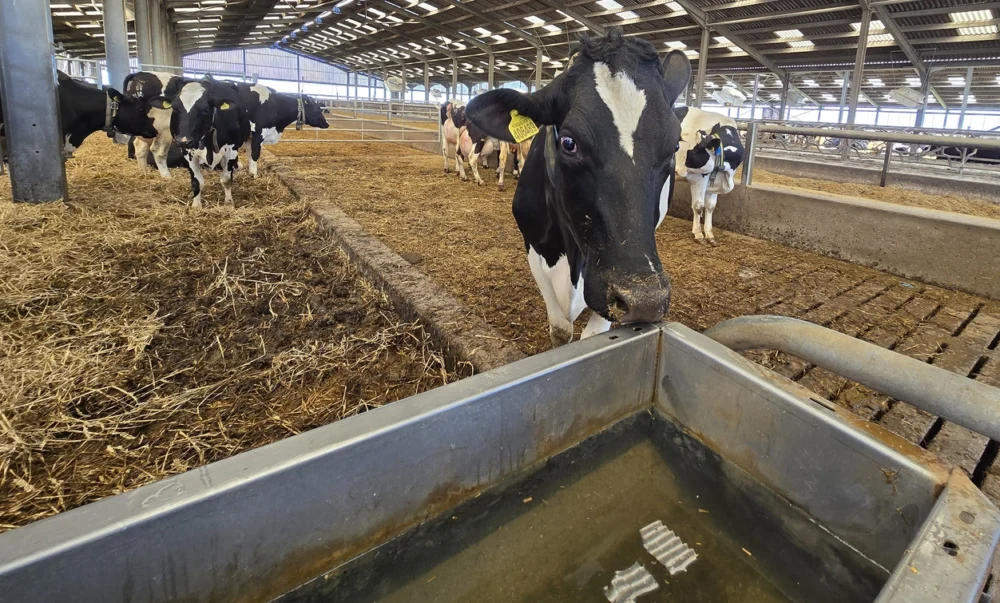

Dairy farmers preparing to house cows for winter are being urged to clean and disinfect water lines to remove harmful pathogens that may have built up during the hot summer.
Troughs and pipelines left stagnant over summer – particularly in hot weather – can quickly become breeding grounds for bacteria and biofilms. These not only clog up water systems but also reduce palatability, intake, and could harm herd health, warns biosecurity specialist Nigel Bennet from Roam Technology.
“Left unchecked, contaminated water becomes a hidden reservoir of disease that can damage herd health and eat directly into milk yields and farm profitability,” he says.
“Pathogens like Cryptosporidium parvum can survive six months in water, Salmonella for 50 days, and E. coli for up to a year. Campylobacter and enteric viruses, such as rotavirus and norovirus, thrive in biofilms inside water lines, creating a constant source of reinfection.”
Biofilm forms when free-swimming microbes, such as bacteria, attach to surfaces in water systems and secrete sticky, glue-like substances that create a protective matrix. This allows bacteria to multiply and form persistent communities, creating potential reservoirs for pathogens as well as management issues like blocked lines.
Mr Bennet stresses that water is too often overlooked: “Water is the most critical nutrient for dairy cows – yet it’s often ignored. High-yielding cows can drink up to 250 litres a day. Contaminated water reduces intake, disrupts rumen function, and can damage fertility – all of which directly affect production and profitability.”
Carson Pridham of Intemax, specialists in livestock water systems, adds that problems are widespread: “The water in the majority of troughs I see is far from potable– you can see the build-up of biofilm in the drinker. Other times, farmers report reduced intakes without realising water quality is the cause. When we test water and take bacterial samples, the results are often a shock.”
Roam Technology and Intemax are working with increasing numbers of dairy farmers to help improve water hygiene and support production. Their recommended approach is to thoroughly clean the water system and then keep it clean with constant dosing – a process routinely seen on pig and poultry farms.
Intemax uses Huwa-San TR-50, a 50% silver-stabilised hydrogen peroxide disinfectant from Roam Technology. It destroys bacteria, viruses, fungi and biofilms, while safely breaking down into water and oxygen with no harmful residues.
“Regular water treatment protects herd health and maximises water intake and milk production,” adds Mr Pridham. “Calves also need clean water from day one to develop a healthy rumen. By weaning, they may drink up to 12 litres a day – hygiene is critical for lifetime performance.”
Animal welfare regulations also require livestock water to be of sufficient quality, and retailers are increasingly monitoring standards.
“But clean water is not just about compliance – it pays off in healthier cows, higher yields, and improved fertility. If you aren’t prepared to drink the water yourself, then you shouldn’t expect your cows to drink it,” adds Mr Bennet.

| [donate]
| Help keep news FREE for our readersSupporting your local community newspaper/online news outlet is crucial now more than ever. If you believe in independent journalism,then consider making a valuable contribution by making a one-time or monthly donation. We operate in rural areas where providing unbiased news can be challenging. |