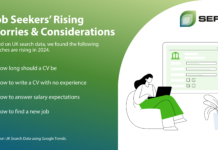


















With the average job hunt now lasting several months, many job seekers are facing a hidden challenge: job-search burnout.
According to the Office for National Statistics, the number of people unemployed for 12 months or more rose in the latest quarter (May to July 2025), highlighting the growing challenge of long-term unemployment and its potential impact on wellbeing. In response, career experts at resume.io have shared practical advice to help job seekers maintain momentum and protect their mental health while navigating today’s challenging hiring landscape.
“Job hunting can feel like a full-time job, especially in today’s competitive market,” says Amanda Augustine, resident career expert for resume.io and a Certified Professional Career Coach (CPCC). “That’s why it’s important to manage stress and set boundaries so the process feels more sustainable and less overwhelming.
1. Set job-search hours
Treat your job search like you would any other job. Block out time in your calendar for tasks such as updating your CV, searching for listings, applying, and following up on applications, and networking activities. Just as important, set firm start and end times for each day. Giving yourself permission to log off helps maintain balance and prevents the job search from taking over your evenings and weekends.
2. Create ‘micro-goals’ (and celebrate the wins)
Remember, the job search is more like a marathon than a sprint. The road to landing a new job can feel overwhelming if you only focus on the finish line. Instead, break down your job search into smaller, more manageable steps, or “micro-goals,” such as taking inventory of your strengths and skills, researching the job market, defining short-term job goals, or updating your CV. Focusing on one micro-goal at a time — and celebrating its completion — can help you make steady progress without burning out along the way.
3. Focus on job-application quality and quantity
Instead of blasting out dozens of rushed applications, set a realistic daily or weekly goal for yourself, such as 3 to 5 tailored applications per day. This lets you carefully customise each application and seek out relevant connections for potential employee referrals, both of which will increase your chances of standing out to employers and landing an interview. Also, consider setting aside specific days or blocks of time throughout the week to dedicate to the job-application process. This helps you avoid the endless cycle of “apply, refresh inbox, repeat,” which often leads to burnout.
4. Take regular breaks
It’s easy to let the job search take over your day, but constant focus without rest is a recipe for burnout. Build in short breaks to step away from your home working space, whether it’s a quick walk around the block or a 15-minute pause to reset. Just as important, give yourself permission to fully unplug on weekends or during planned time off. Creating space to recharge helps you return to the search more productive, less stressed, and ready to tackle the next step.
5. Stay active to clear your head
Exercise is one of the best ways to manage stress and keep a positive outlook during the job hunt. Find a routine that works for you, whether it’s a gym class, a run, or a walk with a friend. Even 5 to 10 minutes of aerobic movement can lift your mood, sharpen your focus, and help you shake off job-search stress. When you build movement into your week, you’ll show up clearer, calmer, and more confident in every application and interview.
6. Mix up your networking tactics
Constantly sending out applications can get monotonous and lead to burnout. Mixing in networking activities not only keeps things fresh but also boosts your odds of success, since many jobs are filled through referrals or shared privately before they ever hit job boards.
Try blending both in-person and digital tactics, such as informational interviews, local networking events, industry association meetings, engaging on LinkedIn, or reconnecting with former colleagues, to see which strategies feel most natural. Shaking up your routine this way helps you uncover new leads while keeping the job search from becoming overly repetitive.
7. Reframe rejection
It’s important to remember that rejection is not a reflection of your worth; it’s a crucial part of the process. Factors that are out of your control, such as internal hiring changes or stiff competition, can influence the outcome. Instead of dwelling on a “no,” look for takeaways. Did the job description highlight a skill you could strengthen? Did the interview reveal an area to practice? Each rejection is really a redirection toward the right fit.

| [donate]
| Help keep news FREE for our readersSupporting your local community newspaper/online news outlet is crucial now more than ever. If you believe in independent journalism,then consider making a valuable contribution by making a one-time or monthly donation. We operate in rural areas where providing unbiased news can be challenging. |