











Huge injustices in dementia training revealed across social care: half of staff receive just one to two hours of dementia learning despite people living with dementia being one of the biggest groups drawing on social care.
Alzheimer’s Society Cymru is today warning that serious shortfalls in dementia training in Wales are leaving social care staff unprepared, unsupported, and putting people with dementia at risk of inadequate care.
New findings from research commissioned by Alzheimer’s Society and led by experts at the Centre for Dementia Research at Leeds Beckett University and IFF Research show that half of all reported training packages offered just one to two hours of dementia-specific content. In Wales, up to a third of care staff (34%) do not have the basic knowledge of dementia, with 36% likely to start caring for people with no dementia training at all.
Alzheimer’s Society Cymru is calling on the next Welsh government to publish and deliver a bold and ambitious new 10-year dementia strategy, which includes mandatory dementia training for relevant adult social care staff. It’s estimated that more than 51,000 people are living with dementia in Wales, rising to nearly 70,000 by 2040.
Dementia is complex. It affects memory, problem-solving, language and communication, so care needs to be tailored. Most dementia care is provided through social care rather than the NHS. In Wales, a review of 30 training packages across 13 social care providers, combined with a survey of 50 care staff, reveals:
· 64% of staff received dementia training as part of their induction
· Only 58% report feeling very competent in the care they are providing
· Just under three quarters of care workers agreed they would like more dementia-specific training
High quality dementia training equips care workers with the skills and knowledge they need to provide good care, build positive relationships and can reduce the inappropriate use of antipsychotic drugs which are sometimes used to manage behaviours that challenge. Another benefit is the potential cost savings from reduced GP appointments and emergency hospital admissions.
Michelle Dyson CB, CEO at Alzheimer’s Society said: “One hour of dementia training doesn’t even scratch the surface. Anything less than comprehensive training leaves care workers unprepared, coping with situations they haven’t been equipped for, which can put people with dementia at risk of inadequate care. Baristas can receive more training to make great coffee than care workers receive to provide dementia care. Care staff want and deserve better; they need dementia training which gives them the skills and confidence to deliver the best possible care. Without high quality dementia training, social care will remain dangerously inconsistent, leaving families unsure whether loved ones will be supported with dignity and expertise. We need to close the training gap, with better dementia care, everyone benefits. It’s crucial that whoever ends up in the Senedd after 7 May elections, prioritises a bold and ambitious new dementia strategy that includes a requirement for mandatory dementia training for all relevant adult social care workers.”
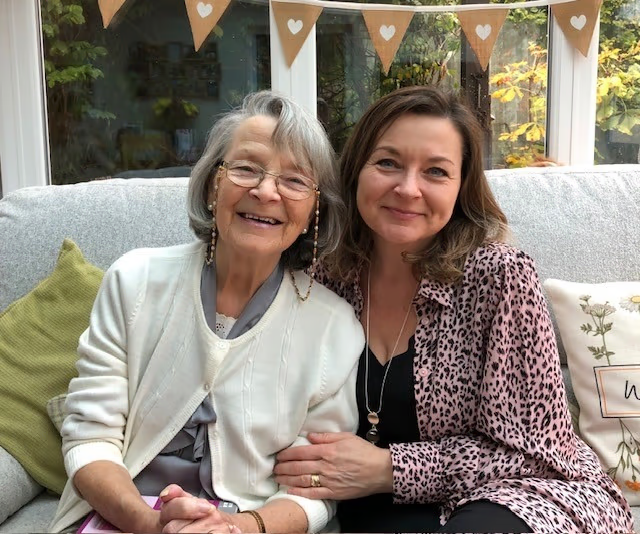
Mags Whitehouse, from Gorseinon, Swansea, knows what insufficient dementia training provides, having seen her mum receive poor care when she was living with dementia. She said: “My mum was diagnosed in 2020 and died three years later. In that short time, we paid for carers to support her at home and experienced professionals looking after her in what was described as an Alzheimer’s specialist care home. Neither situation ever showed us that staff were equipped or understood how to care for someone with dementia. Mum’s dignity was taken from her, there was little to no empathy shown or patience provided. Instead, care was rushed, we were told at times mum was stubborn and she was treated in ways that went against our advice or we just weren’t listened to as people who knew her best. I can’t change what happened to my mum and we have to live with some of the harrowing situations experienced, but I’ll do what I can to change it for others who will need care and support in the future.”
Image of Mags Whitehouse and her mother Gladys featured.
To read Alzheimer’s Society Cymru’s full report The Training Gap: A Hidden Injustice in Dementia Care and How to Fix It, visit alzheimers.org.uk/training-gap

| [donate]
| Help keep news FREE for our readersSupporting your local community newspaper/online news outlet is crucial now more than ever. If you believe in independent journalism,then consider making a valuable contribution by making a one-time or monthly donation. We operate in rural areas where providing unbiased news can be challenging. |