










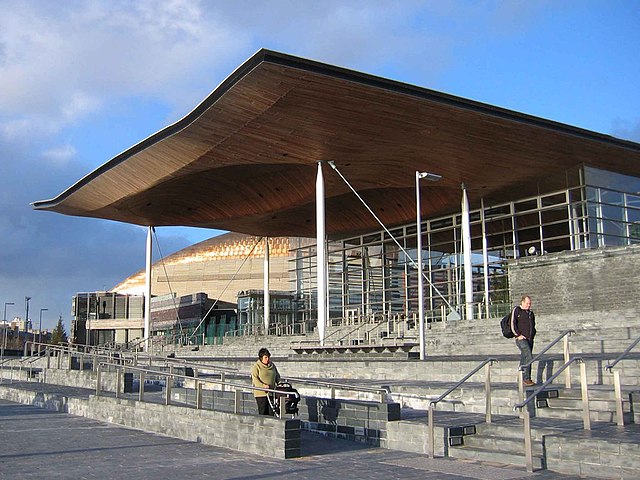

One of the many changes ahead of next month’s Senedd election is the introduction of Welsh language names for the 16 new constituencies.
Set by the Democracy and Boundary Commission Cymru (DBCC) – an independent body that reviews electoral boundaries for the Senedd and local government in Wales – the new areas were introduced as part of wider reforms to the Senedd’s electoral system.
The new larger constituencies were created by ‘pairing’ Wales’ 32 UK Parliament seats.
For example the new constituency of Sir Gaerfyrddin has been created by pairing the two UK constituencies of Caerfyrddin and Llanelli.
How were the names decided?
The DBCC was required to create a single name – for Welsh and English language use – for each of the new constituencies.
The commission had the authority to create both a Welsh-language name and an English language version, if a single name to cover both languages couldn’t be found.
A Welsh-language name was considered suitable if it was seen as likely to be recognisable to residents of the region whose primary language is not Welsh.
New names backed
Welsh language campaigners have welcomed the move – emphasising the importance of bringing the Welsh language further into everyday life.
The Welsh Language Society Cymdeithas yr Iaith has fully-backed the move.
Aled Thomas, Chair of Cymdeithas yr Iaith’s Rights Group said: “The fact that every constituency for the 2026 Senedd elections has a Welsh-only name is a sign of our confidence to use Cymraeg in our national life.
“Welsh is our unique national language, and it belongs to all of us as citizens of Wales and to every part of the country.
“Giving constituencies across Wales a Welsh-only name helps to ensure that Welsh names are seen, heard and used as a normal part of Welsh democratic and national life, in line with the official status of the Welsh language.
“The 2026 election opens a new chapter in the history of devolution, with a larger Senedd. We know that the use of Welsh in the Senedd is currently low, and we’ll be campaigning over the coming period to ensure an increased status and greater use of the Welsh language in the Siambr and beyond when the new Senedd is elected.”
Opposition
There has been some backlash against the transition to Welsh-only names for the new constituencies.
During its process of renaming, the commission did receive objections to Welsh-only names. According to its final report, published in March last year, it noted that people felt “it failed to treat the English language equally with the Welsh language, or was otherwise prejudicial to the interests of residents of Wales who do not speak Welsh”.
Andrew RT Davies, the former Welsh Conservative leader who is a candidate in Pen-y-Bont Bro Morgannwg, has also voiced his disapproval.
Taking to X, formerly Twitter, on March 30 this year, RT Davies said he he would be refusing to use the new Welsh language constituency names.
He said: “Senedd constituency names should not have been Welsh only. I’m standing in the Vale of Glamorgan and Bridgend.
“On the doorstep, residents have told me the constituency’s official name, “Pen Y Bont Bro Morgannwg”, confuses them.
“On my campaign material, I’m using the English name.”
You can find out more about the constituency changes on the Senedd website.

| [donate]
| Help keep news FREE for our readersSupporting your local community newspaper/online news outlet is crucial now more than ever. If you believe in independent journalism,then consider making a valuable contribution by making a one-time or monthly donation. We operate in rural areas where providing unbiased news can be challenging. |