











Cardiff University-led research finds people judge pandemic risk by magnitude of policy response
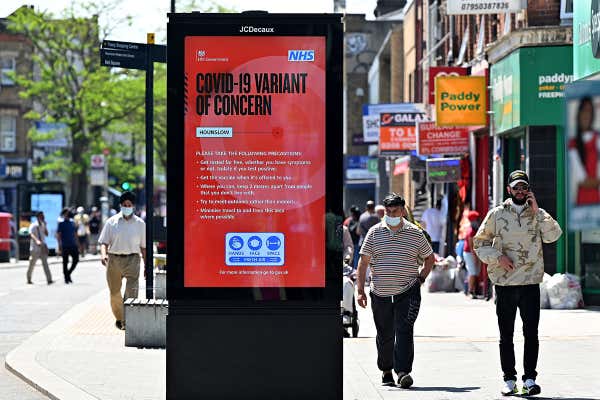
The UK public is likely to take the COVID-19 pandemic less seriously once restrictions are lifted, according to new research led by Cardiff University.
Psychologists found lockdown in itself was a primary reason why so many people were willing to abide by the rules from the start – believing the threat must be severe if the government imposes such drastic measures.
The team from Cardiff and the universities of Bath and Essex examined the reasons behind headline polling support for COVID-19 measures. They carried out two UK surveys*, six months apart, during 2020. Their findings are published today in the journal Royal Society Open Science.
Lead author Dr Colin Foad said: “Surprisingly, we found that people judge the severity of the COVID-19 threat based on the fact the government imposed a lockdown – in other words, they thought ‘it must be bad if government’s taking such drastic measures’.
“We also found that the more they judged the risk in this way, the more they supported lockdown. This suggests that if and when ‘Freedom Day’ comes and restrictions are lifted, people may downplay the threat of COVID.”
The research also found:
- Raising people’s personal threat was unlikely to enhance their support for restrictive measures;
- People supported lockdown yet thought many of its side effects were “unacceptable” in a cost-benefit analysis.
Dr Foad said: “The pandemic has been characterised by strong public support for lockdowns, but our research suggests that people have actually been much more conflicted than the headline polls suggest.
“However, we find that most people’s personal sense of threat does not relate to their support for restrictions. Instead, people judged the threat at a much more general level, such as towards the country as a whole. So, any messaging that targets their personal sense of threat is unlikely to actually raise support for any further restrictions.”
The researchers warned there was a risk of public opinion and government policy “forming a symbiotic relationship”, which could affect how policies are implemented now and in future.
Professor Lorraine Whitmarsh, an environmental psychologist from the University of Bath, said: “This has important implications for how we deal with other risks, like climate change – the public will be more likely to believe it’s a serious problem if governments implement bold policies to tackle it.”
Professor Whitmarsh suggested bold actions might include stopping all road building (as has happened recently in Wales) or blocking airport expansions.
The researchers are calling for more nuanced use of polling data during the pandemic to accurately gauge the diversity and complexity of public opinion.
Dr Paul Hanel, a lecturer in psychology at the University of Essex, said: “Polling data from large samples are important in understanding what people think. Our study, however, shows that it is crucial to ask the right questions because otherwise we are only getting a limited and potentially even misleading picture of how diverse and even conflicting public opinions truly are.”

| [donate]
| Help keep news FREE for our readersSupporting your local community newspaper/online news outlet is crucial now more than ever. If you believe in independent journalism,then consider making a valuable contribution by making a one-time or monthly donation. We operate in rural areas where providing unbiased news can be challenging. |