












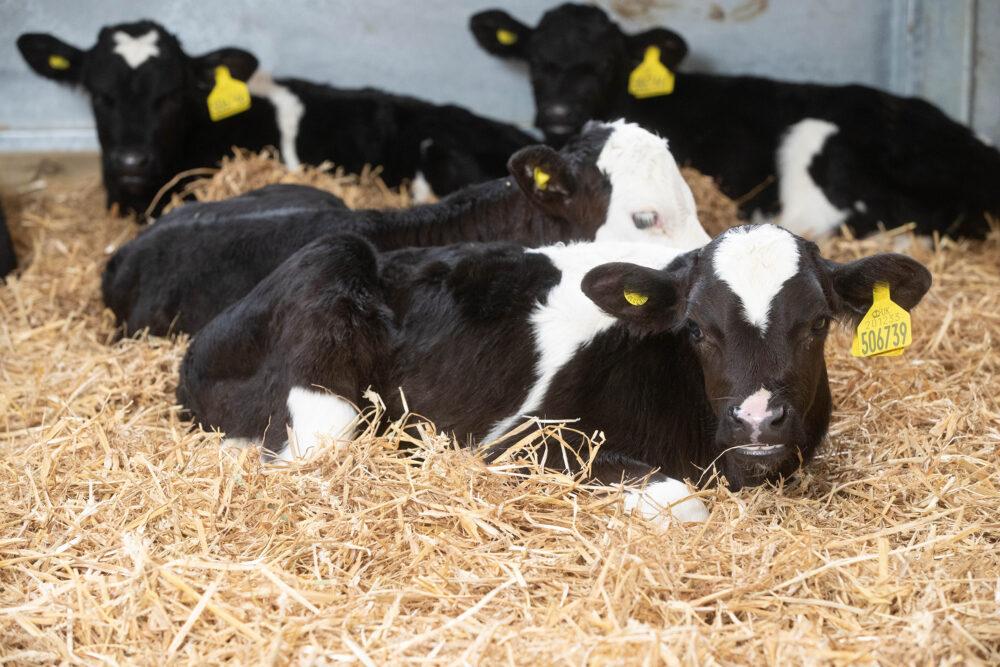

With cows housed and the threat of disease amplified over the winter months, calves are most at risk. So says Alison Clark from dairy hygiene specialist Progiene, who suggests winter is a critical time to be keeping calf sheds clean.
“Disinfecting calving facilities prior to calving helps reduce future disease pressure. Many parasites and eggs can survive for several weeks, so having a ‘dry’ period is critical and many pathogens and parasites thrive in damp, dirty conditions, so a clean, dry environment is important to minimise infection risk,” she says.
She points to some simple steps that can be taken to prepare housing for calves.
“Remove manure, old bedding and any debris from calf pens. Use a power washer to remove any visible residues, paying close attention to wall and ground crevices which can harbour manure,” she says.
Having emptied calf pens, she recommends a thorough cleaning and disinfectant process.
“Steam clean the entire facility to sterilise the environment and remove any residues. Soak the shed walls, flooring and any stock boarding with Coxicur, a broad-spectrum, DEFRA approved, terminal disinfectant and leave the area to dry. This process should be completed as much as eight weeks before calving,” she says.
The eight-week period will provide sufficient dormant time to reduce pathogen levels for when the calves are introduced. However, the area itself is only part of the overall process, says Ms Clark.
“Every touch point on the farm needs to be considered as part of the sanitisation process. Considering everything from milk collection and feeding equipment to gates, walls and floors will help to prevent vulnerable calves being in danger during the early days and weeks following calving.”
If a farm has had specific historical problems, she suggests using targeted sanitisation products across the farm to help with recurring or persistent bacteria, moulds and yeasts.
“If farms need specific disinfectants to control TB, salmonella, E.coli and Johnes Disease then products such as Tibicur, a DEFRA approved, iodine based, terminal disinfectant will be ideal for calf housing,” she says.
She suggests that keeping track of what pathogens are present on farm each year will help to choose the appropriate disinfectant.
“A good way to do this is through the use of Progiene calf scour test kits throughout the calving season. Within 10 minutes of collecting fresh manure, the test can detect rotavirus, coronavirus, E. coli and cryptosporidium parvum in calves.
“The majority of farms have scour causing pathogens, which are highly transmissible, and pathogens like cryptosporidium can survive for months in the right conditions. Taking the time to clean and disinfect pens and equipment well ahead of calving will reduce the risk of infection and support the health and performance of calves,” she concludes.

| [donate]
| Help keep news FREE for our readersSupporting your local community newspaper/online news outlet is crucial now more than ever. If you believe in independent journalism,then consider making a valuable contribution by making a one-time or monthly donation. We operate in rural areas where providing unbiased news can be challenging. |